

Understanding Private Pay: Your Path to Recovery Starts Here
Private pay treatment means you or your family cover the cost of addiction treatment directly, without relying on insurance as the primary payment method. Here’s what you need to know:
- What it is: Out-of-pocket payment for rehab using cash, credit, loans, or payment plans
- Why it matters: 90% of treatment facilities accept self-payment, making it the most widely available payment option
- Key benefit: Complete control over where you receive treatment and what services you choose
- Common misconception: It’s not just for the wealthy—many facilities offer payment plans and sliding scale fees
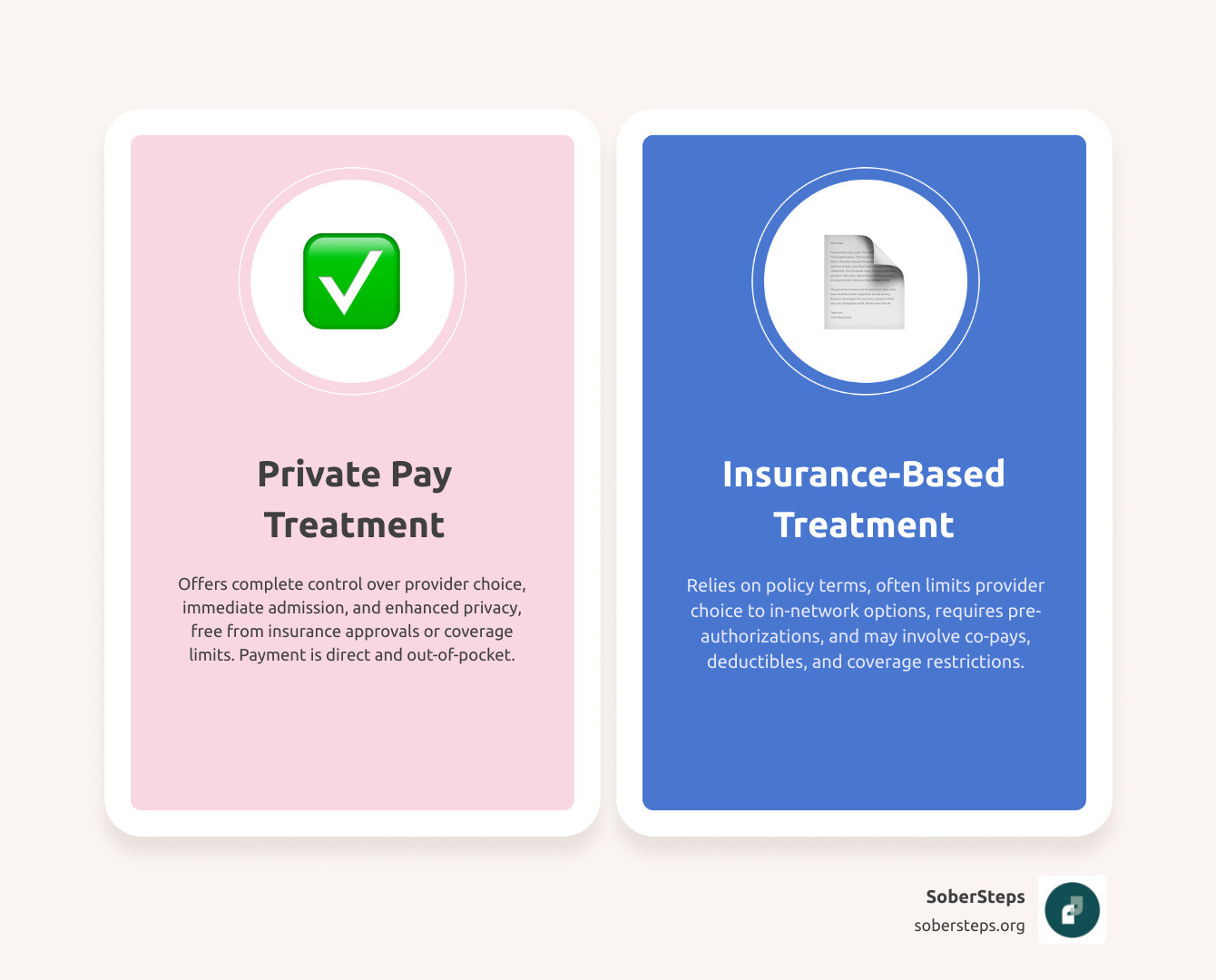
When you’re facing addiction, the question “How will I pay for treatment?” can feel overwhelming. You might worry that the cost will be too high, or that you’ll be stuck with limited options. The truth is simpler: private pay treatment gives you flexibility and freedom to choose the care that fits your needs, without waiting for insurance approvals or dealing with coverage limitations.
At Sober Steps, we’ve helped thousands of individuals and families steer the financial complexities of addiction treatment, including understanding private pay treatment options and finding facilities that match both clinical needs and budgets. We’re here to walk you through every step of this journey.
Call to Action: Explore your payment options for treatment with SoberSteps.
What is Private Pay Treatment and How Does It Work?
Private pay treatment, also known as “self-pay,” is when you or your family directly pay a treatment facility for services without using insurance as the primary payment method. Instead of navigating co-pays, deductibles, and insurance negotiations, you handle the cost out-of-pocket.
The main advantage is freedom from insurance restrictions. With private pay, you are not bound by an insurer’s network limitations, “medical necessity” rules, or lengthy pre-authorization delays. This opens up a wider array of treatment centers and specialized programs, giving you more control over your care.
While state-funded options exist, they can have long waitlists and fewer specialized programs due to high demand. Private pay treatment often allows for quicker admission and a greater selection of facilities that fit your specific needs.
Even when you pay privately, insurance can sometimes play a supporting role. Depending on your plan, you may be able to get partial reimbursement for out-of-network services. It’s always a good idea to understand your policy and the protections offered by mental health parity laws, which mandate equal coverage for mental and physical health.
Call to Action: Learn more about your payment options with SoberSteps.
Understanding Your Options Beyond Insurance
Choosing private pay treatment opens doors, especially for those who are uninsured or have inadequate coverage. It provides direct access to care without the red tape and frustrating delays of insurance pre-authorizations, allowing for immediate admission when time is critical.
The most compelling benefit is the freedom of choice. You are not limited to an insurance company’s network, so you can select a facility based on its clinical reputation, specialized programs, or location. Private pay also offers improved privacy, as less of your personal health information is shared with third parties.
Even if you plan to pay privately, we encourage you to verify your insurance benefits to see what might be covered for out-of-network care. This knowledge empowers you to make the most informed decision.
The Different Types of Private Pay Rehab
Private pay treatment gives you access to the full spectrum of addiction treatment. Since 90% of facilities accept self-payment, your choices are vast. You can choose the type and intensity of care that best suits your recovery journey.
Here’s a list of common treatment types accessible through private pay:
- Medical Detox: The first step for many, providing medically supervised withdrawal to ensure safety and comfort over several days.
- Inpatient/Residential Treatment: Living at a facility 24/7 for intensive therapy in a structured environment, typically for 30, 60, or 90 days.
- Partial Hospitalization Programs (PHP): A step down from inpatient care, offering structured treatment for several hours a day while you live at home or in sober living.
- Intensive Outpatient (IOP): Provides significant therapeutic support with fewer hours than PHP, allowing you to maintain work or school responsibilities.
- Online Rehab: Virtual treatment programs that offer flexibility and accessibility for those unable to attend in person.
- Aftercare & Sober Living: Crucial for long-term recovery, this includes ongoing therapy, support groups, and sober living homes to help you transition back to daily life.
With private pay treatment, you have the flexibility to choose the program that aligns best with your needs, without external limitations.
Call to Action: Find the right level of care for you.
The Financial Realities of Private Pay Rehab
Understanding the financial investment for private pay treatment is a key step in planning for recovery. While costs can seem high, it’s best to view this as a long-term investment in your health and future. Costs vary dramatically, but the benefits of effective treatment far outweigh the ongoing costs of addiction.

Navigating these financial realities can be challenging, but we’re here to help you explore options and find facilities that align with your budget. Our goal is to ensure that cost doesn’t become a barrier to the help you deserve.
Call to Action: Find affordable mental health care options.
What Factors Influence the Cost of Private Pay Treatment?
The cost of private pay treatment is not uniform. Several key factors contribute to the wide range in prices:
- Level of Care: This is the most significant factor. Medical detox and inpatient residential care, which include 24/7 supervision and accommodation, are more expensive than outpatient programs.
- Program Duration: A 90-day program will cost more than a 30-day program, though the daily rate may be lower for longer stays.
- Location: Facilities in areas with a higher cost of living, like major cities or coastal regions, typically have higher prices.
- Facility Amenities: Luxury rehabs with private rooms, gourmet meals, and spa-like services are significantly more expensive than standard facilities.
- Staff-to-Patient Ratio: A lower ratio allows for more personalized care but increases operational costs and, therefore, the price.
- Types of Therapies Offered: Specialized therapies like Experiential Therapy or integrated dual diagnosis treatment require more resources and can increase costs.
Average Costs for Different Levels of Care
To give you a clearer picture, here are some average cost ranges for private pay treatment. These are estimates, and actual costs can vary based on the factors above. For more detailed statistics, you can refer to government resources like the National Center for Biotechnology Information (NCBI).
- Detox Costs: A supervised medical detox program typically costs between $250 and $800 per day.
- Inpatient/Residential Costs: A 30-day program can range from $5,000 to $20,000, while longer 60- to 90-day programs can cost from $12,000 to $60,000. High-end facilities can be much more.
- Outpatient Costs: Outpatient programs are generally more affordable. A three-month program might cost around $5,000, while more intensive options like PHP or IOP can range from $350 to $650 per day.
Here’s a simplified table comparing typical cost ranges:
| Level of Care | Typical Cost Range (U.S.) |
|---|---|
| Medical Detox (7 days) | $1,750 – $5,600 |
| Inpatient Rehab (30 days) | $5,000 – $20,000 |
| Outpatient Rehab (3 months) | $5,000 – $10,000 |
Call to Action: Contact SoberSteps for help finding affordable options.
Weighing the Pros and Cons of Self-Funding Your Recovery
Deciding how to pay for recovery is a significant choice. When considering private pay treatment, it’s important to weigh both the benefits and potential drawbacks to make an informed decision that aligns with your needs and resources.

At SoberSteps, we believe in empowering you with information. While private pay treatment offers distinct advantages, it also comes with financial considerations. Understanding these aspects will help you balance cost and quality of care.
Call to Action: Get help finding the right treatment path for you.
Key Advantages of Choosing a Private Pay Rehab
Opting for private pay treatment can provide several significant advantages:
- Improved Privacy: With fewer third parties like insurance companies involved, there is less administrative data sharing, offering greater confidentiality.
- Immediate Admission: Bypassing insurance pre-authorizations means you can get into a program immediately, which can be life-saving when help is needed urgently.
- Greater Flexibility: You have the freedom to choose a facility and program based on your unique needs, including specific therapists or modalities not covered by insurance.
- Access to Specialized Therapies: Private pay opens the door to a wider array of options, including holistic approaches like Experiential Therapy or specialized trauma care.
- Choice of Amenities and Locations: You can select facilities with high-end amenities, private rooms, or specific locations that contribute to a more comfortable recovery experience.
Potential Disadvantages and Considerations
While the advantages of private pay treatment are compelling, it’s equally important to consider the potential drawbacks:
- Higher Upfront Financial Investment: The most significant drawback is the cost. You are responsible for the entire bill upfront, which can be a substantial financial investment.
- No Negotiated Insurance Rates: You typically pay the facility’s full rate, which is often higher than the discounted rates insurance companies negotiate with their in-network providers.
- The Need to Thoroughly Vet Program Quality: A high price tag does not guarantee quality. It’s crucial to vet any private pay program to ensure its clinical depth and effectiveness.
- “Luxury” Doesn’t Always Mean Better Clinical Care: Some programs focus on luxury amenities, which can inflate costs without providing superior clinical care. Prioritize clinical excellence over superficial comforts.
- Ensuring a Focus on Evidence-Based Treatment: Always confirm that a center uses evidence-based treatment methods, which are scientifically proven to be effective.
Call to Action: Let SoberSteps help you weigh your options.
How to Afford and Find the Right Private Pay Center
Finding and affording the right private pay treatment center can feel like a monumental task, but with careful planning, you can secure the quality care you deserve.
Our team at SoberSteps is dedicated to guiding you through this process. You don’t have to do this alone. Our ultimate guide to treatment options can provide even more detailed assistance.
Financing Options for Private Pay Treatment
Several avenues exist to finance private pay treatment:
- Personal Savings: Using available funds is the most direct way to pay.
- Loans: Consider personal loans from banks, healthcare-specific loans, or borrowing from family, friends, or a 401(k). Always consult a financial advisor about the implications.
- Credit Cards: A credit card, especially one with a low-interest rate for medical expenses, can be a short-term solution.
- Facility Payment Plans: Many rehabs offer in-house financing or payment plans to make costs more manageable. Always ask the admissions department about these options.
- Sliding Scale Fees: Some facilities adjust their costs based on your income.
- Grants and Scholarships: Non-profit organizations may offer financial aid for addiction treatment. You can learn about finding free addiction help by exploring these avenues.
How to Choose a Suitable Private Pay Rehab Center
Once you’ve explored financing, the next step is choosing the right facility. Here’s what to look for to ensure you receive high-quality care:
- Licensing and Accreditation: Ensure the facility is licensed by the state and accredited by a national body like The Joint Commission or CARF. This proves they meet high standards for safety and care.
- Staff Credentials: Ask about the qualifications of the clinical staff, including doctors, therapists, and addiction specialists.
- Dual Diagnosis Treatment: Since addiction often co-occurs with mental health issues, find a program that offers integrated treatment for both.
- Cost Transparency: Get a detailed breakdown of what your payment covers to avoid surprise fees for services like detox, medications, or aftercare.
- Aftercare Planning: A good program will help you create a long-term relapse prevention plan and connect you with ongoing support.
- Therapeutic Approaches: Look for programs that use evidence-based therapies like CBT, motivational interviewing, and trauma-informed care.
At SoberSteps, we provide resources to help you compare centers and make an informed choice.
Call to Action: Reach out to SoberSteps for personalized guidance.
The True Cost: Private Pay Rehab vs. Untreated Addiction
When evaluating the cost of private pay treatment, it’s crucial to compare it against the devastating long-term costs of untreated addiction. While rehab expenses can seem substantial, they are often dwarfed by the cumulative financial, emotional, and social drain of continued substance abuse.
Untreated addiction creates a relentless financial burden:
- Direct Spending on Substances: The daily cost of maintaining an addiction can quickly escalate into thousands of dollars per year.
- Healthcare Expenses: Addiction leads to numerous physical and mental health problems, resulting in frequent doctor visits, ER trips, and hospitalizations.
- Legal Troubles: Substance abuse often results in arrests, court fees, fines, and potential incarceration, all carrying hefty price tags.
- Lost Income and Productivity: Addiction severely impacts job performance, leading to unemployment and lost career opportunities.
- Social and Family Costs: The strain on relationships, family breakups, and the emotional toll on loved ones represent an immeasurable cost that can lead to further financial instability.
Numerous studies highlight the profound economic impact of addiction on individuals, families, and the nation. Viewing private pay treatment as an investment, rather than just an expense, changes the perspective entirely. It’s an investment in rebuilding your life, regaining your health, and securing a future free from the grip of addiction. The tools learned in rehab provide a foundation for improved well-being, productivity, and stable relationships—all of which translate into long-term financial savings and a better quality of life. The cost of addiction is almost always far more expensive than the cost of treatment.
Call to Action: Start your journey to overcoming addiction with the support of SoberSteps.
Frequently Asked Questions about Private Pay Treatment
Can I use my insurance at all for a private pay facility?
Yes, sometimes. While “private pay” means you are responsible for the bill, you may be able to submit a claim to your insurance for “out-of-network” reimbursement. It’s crucial to verify your insurance policy details beforehand to understand what, if anything, might be covered. Some facilities may also be able to work with your insurance provider to arrange a single-case agreement, allowing you to use your benefits at an out-of-network center.
Are private pay rehabs always better than insurance-based ones?
Not necessarily. The quality of a rehab center depends on its clinical staff, evidence-based practices, and accreditation, not its payment model. Private pay treatment offers more flexibility and privacy, but a high-quality, in-network facility can be an excellent, more affordable choice for many. We always recommend prioritizing clinical excellence, appropriate levels of care, and a strong aftercare plan over just the payment method.
Do private pay centers offer payment plans?
Many do. Recognizing the significant cost, numerous facilities offer in-house financing or payment plans to make treatment more accessible. These plans can break down the total cost into manageable monthly installments, sometimes with low or even zero percent interest for an initial period. Always ask the admissions department about their specific financial assistance options when you inquire about a program.
Call to Action: See our FAQ for more answers or contact us directly.
Take the First Step Towards Your Wellness
Navigating addiction treatment, especially when considering private pay treatment, can feel overwhelming. Yet, it’s an empowering path that offers unparalleled flexibility, choice, and often, immediate access to the specialized care you need. We’ve explored how private pay can be a strategic investment in your future, far outweighing the long-term costs of untreated addiction.
At SoberSteps, we believe that recovery is possible for everyone, and that cost should never be the sole barrier to getting help. We are an independent resource dedicated to helping individuals and families explore all available treatment and recovery options. Our goal is to empower you with information and connect you with the right support.
Don’t let the financial aspect deter you from seeking the life-saving care you deserve. Take that crucial first step towards healing and a brighter future.
Call to Action: Contact us today to find a rehab center that fits your needs and budget.