
Why Cravings Don’t Mean You’ve Failed
Help with cravings is one of the most common challenges people face in recovery, and if you’re experiencing them, you’re not alone. Here’s what you need to know right now:
Quick Strategies to Manage a Craving:
- Wait it out – Most cravings pass within 10-30 minutes
- Practice urge surfing – Observe the craving like a wave that rises and falls
- Distract yourself – Call someone, take a walk, or change your environment
- Stay hydrated – Drink water; thirst is often mistaken for cravings
- Use the 10-minute rule – Set a timer and do something else first
Cravings are a normal part of recovery. They’re not a sign of weakness or failure—they’re simply your brain adapting to life without substances. As addiction expert Tom Coderre described it, cravings can feel like “an overwhelming obsession” that you can almost taste and feel. But here’s the important part: cravings are temporary, and you can learn to manage them.
This article will give you practical, evidence-based strategies to handle cravings in the moment and build long-term resilience against them. You’ll learn why cravings happen, how to stop them when they strike, and what lifestyle changes can reduce their intensity over time.
At Sober Steps, we’ve helped countless individuals steer the challenges of recovery, including finding effective help with cravings through confidential support and proven strategies. Our team understands that managing urges is a learnable skill, and we’re here to guide you through every step. For confidential support, call our 24/7 helpline at (844) 491-5566.
Understanding the Science Behind Your Cravings
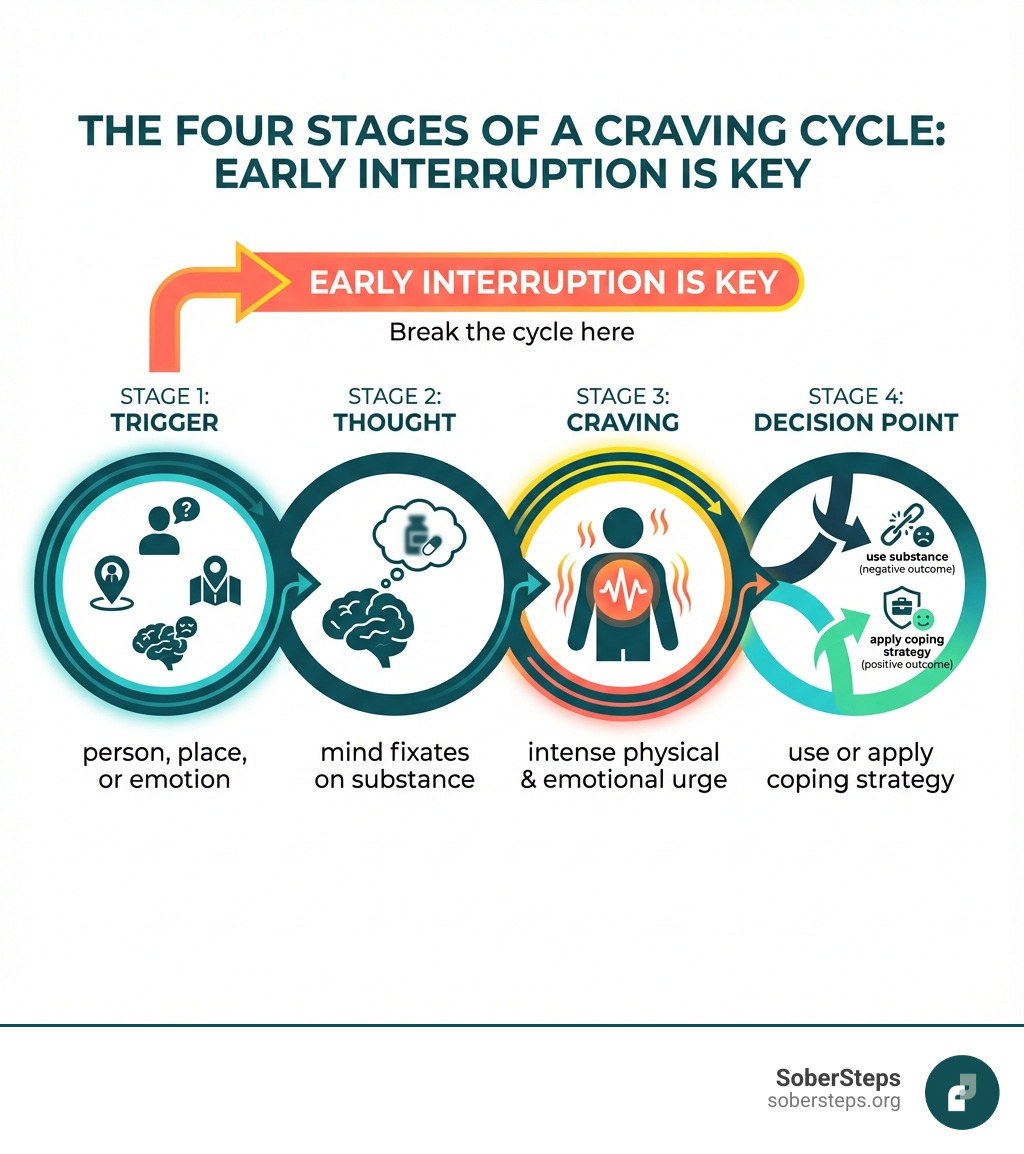
It might feel like your cravings come out of nowhere, but there’s a complex dance happening in your brain. Understanding this dance is the first step toward gaining control. At its core, addiction rewires our brains, creating a powerful conditioned response where the substance becomes linked to survival, almost like breathing or eating. This isn’t a moral failing; it’s a biological phenomenon.
The brain’s reward system, particularly the release of dopamine, plays a starring role here. When we use a substance, our brain floods with dopamine, creating feelings of pleasure and reward. Over time, our brain learns to associate certain cues—like the smell of alcohol, the sight of drug paraphernalia, or even specific emotional states—with that dopamine rush. This is why exposure to cues related to substances can increase heart rate, gastric activity, and salivation, activating those reward pathways in the brain. Food stimulation also has been shown to activate glucose metabolism, a process needed to turn food into energy, reinforcing the idea of reward.
These cravings aren’t just random; they’re often triggered by emotional states like stress, boredom, or sadness. They can also be sparked by environmental factors, such as specific sights, sounds, or smells that we’ve come to associate with using. For example, if you always used a particular substance in a certain place, simply seeing that place again can ignite a craving. Our brains are incredibly efficient at forming these associations, which is why we need equally efficient strategies to break them. You can learn more about how the brain responds to these cues here: The brain’s response to food cues.
What Causes Cravings?
Cravings are an intense desire for something specific, and they can arise from a mix of physical, emotional, and psychological factors. Unlike general hunger, which can be satisfied by almost any food, a craving is very particular. It’s that laser-focused urge for a specific substance or type of food, like that bowl of ice cream or a particular drink.
Often, cravings are not about physical hunger at all. Physical hunger usually builds gradually, while cravings can strike suddenly and intensely. This is the difference between physical hunger and emotional cravings. Physical hunger is your body’s signal for fuel; emotional cravings are often your mind’s way of seeking comfort, distraction, or stimulation.
Sometimes, cravings can also be a signal of unmet psychological needs. Perhaps the craving for a substance is actually a deeper need for relaxation, connection, or a way to cope with anxiety. Additionally, research suggests that certain nutritional deficiencies can even manifest as specific cravings. For instance, some people might crave sweets, potentially indicating a lack of chromium, or in more extreme cases, individuals with iron deficiency have been known to crave non-food items like dirt or chalk. Our bodies can send us some pretty wild signals when they’re out of balance!
The Connection Between Emotions and Urges
Emotional states are powerful architects of our urges. When we’re under stress, feeling bored, sad, or anxious, our brains often seek quick comfort or distraction. Substances, or even certain comfort foods, can become a subconscious coping mechanism for these negative emotions. They offer a temporary escape or a false sense of relief, reinforcing a cycle where emotions trigger the urge, and giving in provides short-lived solace. This is why negative emotions like sadness and anxiety can increase urges and make them harder to resist. You can explore this connection further here: How negative emotions increase urges.
These patterns can become deeply ingrained as habitual behaviors. If we repeatedly turn to a substance every time we feel stressed, our brain learns this association, making it an automatic response. The substance isn’t just about the physical effect; it’s about the learned habit of using it to manage our feelings. Understanding this connection allows us to develop healthier coping mechanisms and break free from the cycle of emotional triggers.
In-the-Moment: How to Stop a Craving in Its Tracks
When a craving hits, it can feel overwhelming, like a tsunami threatening to pull you under. But the good news is, you have immediate strategies at your disposal to ride out the wave. The key is to acknowledge the craving without acting on it, and then implement a distraction or delay tactic.

Many cravings, especially for substances, are uncomfortable but temporary. They often peak and then ease up within minutes, typically lasting no more than 10-30 minutes if handled mindfully. This is where the “10-minute rule” comes in handy: set a timer for 10 minutes and engage in a distracting or enjoyable activity. This delay can be enough to significantly lessen the craving’s intensity.
Physical activity is a powerful tool in these moments. Even a short 15-minute brisk walk can shift your focus, release endorphins, and help curb the urge. If you can’t get outside, try walking up and down stairs or doing some jumping jacks. Sensory engagement can also be surprisingly effective. Smelling a non-food related scent, like flowers or a strong essential oil, can reset your brain. Chewing mint-flavored, sugarless gum or munching on something crunchy like carrots can also provide a healthy sensory distraction, satisfying the desire to chew or crunch without giving in to the craving itself.
Using Mindfulness and ‘Urge Surfing’ for Cravings
Mindfulness is a game-changer when it comes to managing cravings. Instead of fighting or suppressing the urge—which can actually prolong its intensity—we can learn to observe it without judgment. This technique is often called “urge surfing.”
Urge surfing, developed by psychologist Alan Marlatt, teaches us to view cravings like ocean waves. They rise, build to a peak, and then eventually crash and dissipate. Our goal isn’t to stop the wave, but to ride it out. This skill involves acknowledging the urge, noticing the physical sensations, thoughts, and emotions associated with it, and accepting their presence without acting on them. By focusing on our breath as an anchor, we can “surf” through the discomfort, knowing it will pass. You can learn more about this powerful technique here: The concept of urge surfing.
Body scan meditation is another helpful mindfulness technique. It involves systematically focusing your attention on different parts of your body, noticing any tension or discomfort arising from the craving without judgment. This practice helps us stay present and detached from the craving’s pull. Urges typically last 30 minutes at most when they’re handled mindfully and calmly through urge surfing.
The Power of Distraction and Delay
Distraction and delay are your secret weapons when a craving strikes. The goal is to shift your focus and give the craving time to pass. Here are five quick techniques that can help:
- Call a friend or support person: Reaching out to someone in your support network can provide immediate relief and remind you that you’re not alone.
- Engage in a quick hobby or puzzle: Dive into something that requires your attention, like a crossword, a Sudoku puzzle, or even a short burst of creative writing.
- Listen to music: Put on your favorite upbeat tunes or calming melodies to change your emotional state and divert your mind.
- Take a brisk walk or do a quick chore: Physical activity, even for a few minutes, can release endorphins and break the craving’s hold.
- Clean or organize a small area: Tidying up a desk or a drawer can provide a sense of accomplishment and redirect your energy.
Changing your routine is also incredibly effective. If a craving usually hits during a specific time or activity, try doing something different. For instance, if you always used a substance after dinner, go for a walk instead, or call a sponsor. Keeping your mouth busy can also help; chewing sugar-free gum or keeping some hard candy on hand can provide a sensory distraction that sometimes mimics the oral fixation associated with substance use.
And don’t underestimate the power of water! Sometimes, our bodies mistake thirst for hunger or even cravings. Drinking a large glass of water or flavored seltzer can help you determine if you’re truly craving something or just dehydrated. Finally, setting a timer for 10-30 minutes and committing to a distraction before reconsidering the craving can be a powerful act of delaying gratification. We often find that by the time the timer goes off, the intensity of the craving has significantly diminished.
Proactive Lifestyle Changes for Long-Term Help with Cravings
While in-the-moment strategies are crucial, building long-term resilience against cravings requires a more proactive approach. This means making sustainable lifestyle changes that prevent cravings from becoming overwhelming in the first place. Think of it as building a strong fortress rather than constantly fighting fires.
One of the most effective long-term strategies is environmental control, often summarized by the “out of sight, out of mind” principle. If tempting substances or trigger foods aren’t readily available, it takes less willpower to resist them. This simple act of modifying your environment can significantly reduce the frequency and intensity of cravings. We want to make it as easy as possible to make healthy choices, and as difficult as possible to make unhealthy ones.
Fueling Your Body to Fight Cravings
What we put into our bodies has a profound impact on our cravings. A well-nourished body is less likely to send out distress signals that can be misinterpreted as cravings.
- Balanced Meals: Eating regular, balanced meals helps maintain stable blood sugar levels, preventing the dips and spikes that often trigger cravings for quick energy (like sugar or highly processed foods). We encourage eating three square meals and one or two healthy snacks per day.
- Protein and Fiber: Including adequate protein and fiber at every meal and snack is vital. They promote satiety, helping us feel full and satisfied for longer, which reduces the likelihood of impulsive choices.
- Blood Sugar Stability: Opt for complex carbohydrates over simple sugars. This helps prevent rapid fluctuations in blood sugar, which can lead to intense cravings.
- Healthy Food Substitutions: For common cravings, consider healthier alternatives. Craving something sweet? Reach for fresh fruit instead of candy. Want something salty and crunchy? Air-popped popcorn or carrots can satisfy that urge better than chips. We’ve found that some delicious and healthy nighttime snack options can include Greek yogurt, apples with peanut butter, or whole-grain crackers with cheese. You can find more ideas here: Healthy nighttime snack options.
- Hydration’s Role: We can’t stress this enough: stay hydrated! Dehydration is often mistaken for hunger or cravings. Drinking plenty of water throughout the day can significantly reduce unnecessary urges.
- Avoiding Skipping Meals: Skipping meals leaves us overly hungry, making us vulnerable to intense cravings and poor food choices. Consistency is key to keeping cravings at bay.
Optimizing Your Environment and Habits
Our daily habits and surroundings play a huge role in shaping our cravings. By optimizing these, we create a supportive ecosystem for long-term sobriety.
- Sleep Hygiene: The role of sleep in managing cravings cannot be overstated. Lack of adequate sleep can increase hunger, appetite, and cravings for high-calorie, nutrient-poor foods. It also reduces our impulse control, making it harder to resist urges. Prioritize 7-9 hours of quality sleep each night.
- Removing Trigger Foods/Substances: This is the “out of sight, out of mind” principle in action. If you know certain foods or substances are triggers, remove them from your home. If they’re not there, you can’t reach for them impulsively.
- The ‘Cabinet Method’ for Shared Spaces: If you live with others who have tempting foods or substances, consider the “cabinet method.” This involves designating a specific, out-of-sight location (like a cabinet or a high shelf) for these items, making them less accessible and reducing constant visual cues. This method has been successfully used in workplaces to manage shared treats, reducing impulse consumption.
- Meal Planning and Prep: Planning your meals and snacks in advance helps prevent overwhelming cravings by ensuring you always have healthy options available. When hunger strikes, you’re less likely to grab something unhealthy if a nutritious meal is already prepared.
- Creating a Supportive Home Environment: Beyond just food, curate your environment to support your recovery. Fill your space with things that promote calm, joy, and healthy activities. This could mean having books, craft supplies, exercise equipment, or calming music readily available.
Building Resilience: Advanced Tools and Professional Support
Managing cravings effectively is a learned skill, and like any skill, it improves with practice and the right tools. Beyond immediate coping, we focus on building long-term resilience through cognitive techniques and, when necessary, professional guidance.
Cognitive restructuring is a powerful technique that helps us challenge the distorted thoughts that fuel cravings. Instead of automatically believing “I need this to feel better,” we can learn to examine that thought, question its validity, and replace it with more empowering beliefs. This helps break the automatic link between a trigger and the craving response.
Relapse prevention planning is another crucial advanced tool. This involves identifying your personal triggers, assessing high-risk situations, and developing a concrete set of healthy coping skills before you’re in a challenging moment. It’s like creating a personalized roadmap for navigating potential pitfalls, ensuring you have a plan for every possible scenario. Developing new, healthy coping skills to replace old patterns is fundamental to this process.
When to Seek Professional Help with Cravings
While many strategies can be implemented independently, there are times when professional help with cravings is essential. If your urges feel uncontrollable, if you notice persistent emotional eating patterns, or if you’re struggling with co-occurring mental health issues like anxiety or depression that exacerbate cravings, it’s a clear sign to seek expert support. Self-help is valuable, but it’s not always enough.
At SoberSteps, we offer confidential support and specialized programs for managing cravings and emotional eating. Our specialists can help you understand the underlying causes of your cravings, develop personalized coping strategies, and address any mental health challenges that might be contributing. The benefits of therapy extend beyond just managing immediate urges; it helps you build a robust foundation for lasting sobriety. If you’re struggling to manage your cravings alone, or if you feel they’re impacting your ability to maintain sobriety, please reach out. Confidential help is available. Call our 24/7 helpline at (844) 491-5566 to speak with a specialist anonymously.
Personalized Strategies for Lasting Sobriety
One of the most effective ways to understand and manage your cravings is by keeping a food or craving journal. This simple act helps you identify personal patterns: what triggers your cravings, how you feel before and after they strike, and which strategies are most effective for you. You might find that certain times of day, specific emotions, or particular people are consistent triggers.
Working with a SoberSteps specialist allows us to transform these insights into an individualized plan. We don’t believe in one-size-fits-all solutions. Our experts will collaborate with you to create a custom strategy that addresses your unique triggers, emotional landscape, and lifestyle. This personalized approach is key to building lasting resilience and achieving long-term sobriety.
Frequently Asked Questions about Managing Cravings
We understand you likely have many questions about help with cravings. Here are answers to some of the most common ones we hear.
How long do cravings typically last?
This is a great question, and the answer is usually shorter than you might think! While they can feel intense, cravings are temporary. Nicotine cravings, for example, often ease up within minutes. Generally, urges typically last 10-30 minutes at most when they’re handled mindfully and calmly through techniques like urge surfing. The good news is that as more time passes in your recovery, the frequency and intensity of your cravings should gradually lessen.
What is the difference between a craving and physical hunger?
This is a crucial distinction! Physical hunger is your body’s signal that it needs fuel. It builds gradually, is often accompanied by physical sensations like a growling stomach, and can be satisfied by a variety of foods. A craving, on the other hand, is a strong, often sudden, desire for a very specific substance or type of food (e.g., “I need chocolate,” or “I need a drink”). Cravings are often emotionally driven and can occur even when you’re physically full. They are specific and emotional, while hunger is gradual and physical.
Can exercise really help with cravings?
Absolutely, yes! Exercise is a powerful tool for managing cravings. Physical activity releases endorphins, which are your brain’s natural “feel-good” chemicals. These endorphins boost your mood, reduce stress, and can significantly diminish the intensity of cravings. Even a short bout of exercise, like a 15-minute brisk walk, can help take the edge off and serve as a powerful distraction. Studies have documented a significant change in addiction-related outcomes, such as more days abstinent and reduced cravings, in response to exercise. You can explore the benefits of physical activity in recovery further. So, when a craving strikes, consider moving your body—even a little bit can make a big difference.
Conclusion
Navigating cravings is a fundamental part of the recovery journey, but it doesn’t have to be an impossible challenge. By understanding the science behind your urges, implementing immediate coping strategies, and making proactive lifestyle changes, you can build powerful resilience. We’ve explored how dopamine and learned associations drive cravings, how emotional and environmental triggers play a role, and the critical difference between physical hunger and emotional urges.
We’ve also armed you with practical, in-the-moment tools like the 10-minute rule, distraction techniques, and the transformative power of “urge surfing” to ride out those temporary waves of discomfort. For long-term success, remember to fuel your body with balanced nutrition, prioritize sleep, optimize your environment by removing triggers, and plan your meals and activities.
Building resilience also involves advanced tools like cognitive restructuring and comprehensive relapse prevention planning. Managing cravings is a learnable skill, and every time you successfully steer an urge, you strengthen your ability to do so again. You are not alone in this journey, and there is always help with cravings available.
If you or a loved one are struggling with cravings or emotional eating patterns, confidential help is available. Call our 24/7 helpline at (844) 491-5566 to speak with a specialist anonymously. At SoberSteps.org, we are committed to providing the support and resources you need for a sober and fulfilling life.