

Why Understanding Modern Addiction Treatment Matters
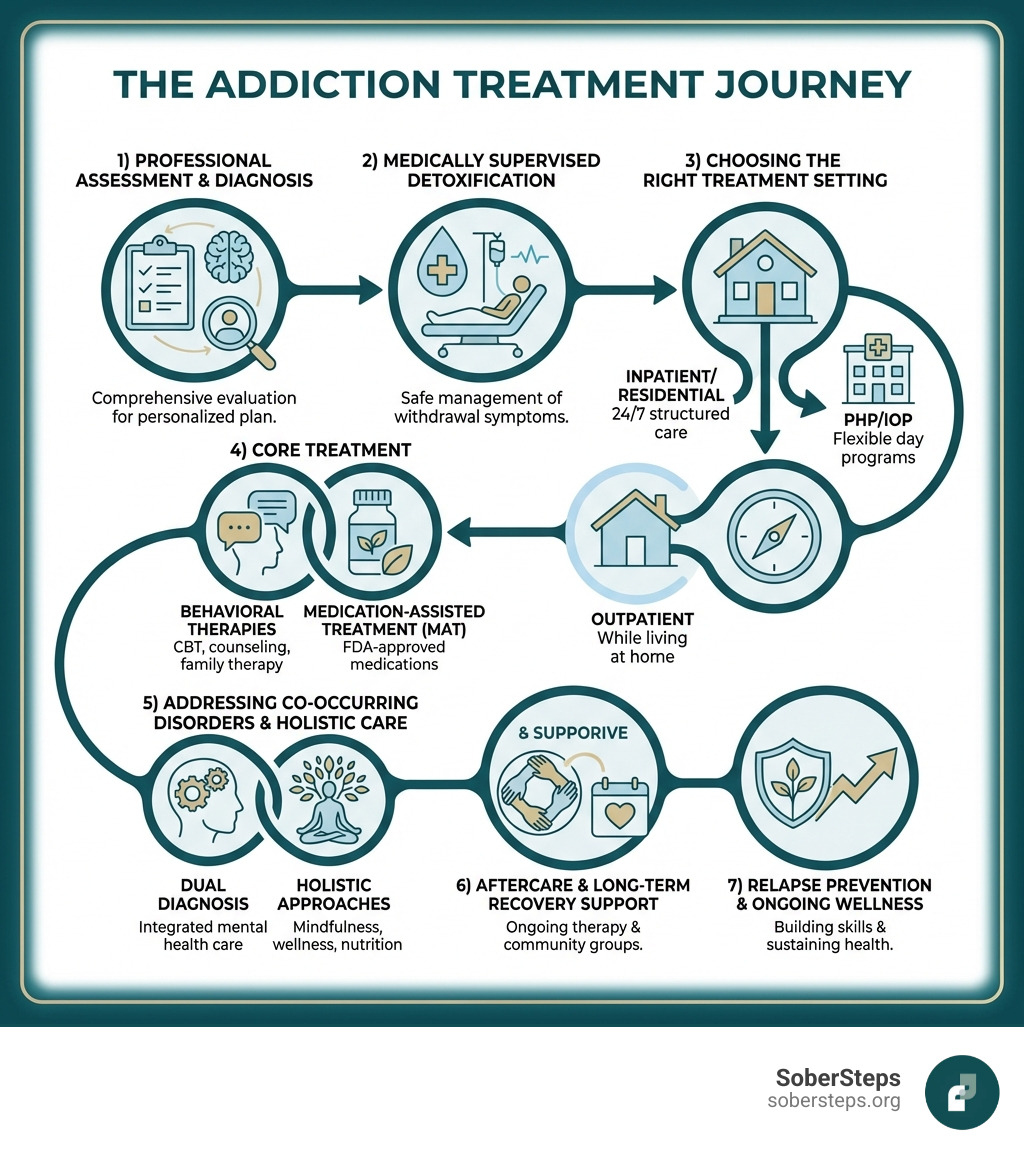
How is addiction treated? Addiction is treated through a combination of evidence-based approaches custom to each individual’s needs. Here’s a quick overview:
Core Treatment Methods:
- Medical Detoxification – Safely managing withdrawal symptoms under medical supervision
- Behavioral Therapies – Including Cognitive Behavioral Therapy (CBT), individual counseling, group therapy, and family therapy
- Medication-Assisted Treatment (MAT) – FDA-approved medications for opioid, alcohol, and nicotine addiction
- Residential/Inpatient Programs – 24/7 structured care in a supportive environment
- Outpatient Programs – Flexible treatment while living at home (PHP, IOP, standard outpatient)
- Dual Diagnosis Treatment – Integrated care for co-occurring mental health conditions
- Aftercare & Recovery Support – Ongoing therapy, support groups, and relapse prevention
If you or a loved one is struggling, reach out to SoberSteps today for confidential support.
Right now, someone you know—maybe even you—is wrestling with the question: Is recovery really possible?
The answer is yes. Addiction is a treatable brain disease, not a moral failing. In 2022, over one in six Americans aged 12 or older had a substance use disorder, yet stigma and confusion about treatment still prevent many from seeking help.
Modern addiction treatment has evolved dramatically. We now know it requires a comprehensive, individualized approach to address the changes it causes in brain chemistry. Research shows that effective treatment can reduce drug use by 40-60% and significantly improve a person’s life and employment prospects.
However, navigating detox, therapy, and other options can feel overwhelming. This guide cuts through the confusion, explaining how addiction is treated, what to expect, and how to find quality care that addresses the whole person—including mental health and family wellness.
At SoberSteps, we support individuals and families through every step of recovery. Our platform provides reliable information, connects you with vetted providers, and offers the guidance you need to take that first courageous step.
Explore our full range of addiction resources to learn more about specific substances, treatment approaches, and recovery paths.
First, Understanding Addiction: A Treatable Brain Disease
Before exploring how is addiction treated, it’s crucial to understand what addiction is. Science now defines addiction as a chronic, treatable brain disease, not a moral failing or lack of willpower. The American Society of Addiction Medicine (ASAM) characterizes it by the compulsive pursuit of a substance or activity despite harmful consequences. This complex medical condition alters brain function, but like other chronic diseases such as heart disease or asthma, it can be managed effectively. Addiction is a widespread challenge; in 2022, over one in six Americans aged 12 or older experienced a Substance Use Disorder (SUD).
Call to Action: Learn more about addiction and how SoberSteps can help.
What is a Substance Use Disorder (SUD)?
A Substance Use Disorder (SUD) is a chronic disease where an individual continues using a substance despite significant related problems. This persistent use alters brain chemistry, affecting reward, motivation, and memory circuits. A licensed professional, like a psychiatrist or addiction counselor, diagnoses an SUD using criteria from the Diagnostic and Statistical Manual of Mental Disorders (DSM-5). The diagnosis, which focuses on behavioral patterns, determines the SUD’s severity (mild, moderate, or severe). Lab tests may be used to monitor substance use during treatment but are not used for the initial diagnosis.
Call to Action: Understand SUDs and your options.
Common Types of Addiction
Addiction falls into two main categories: substance addictions and behavioral addictions.
Substance addictions involve misusing substances that affect the brain’s reward system. Common types include:
- Alcohol: The most common substance addiction in the U.S. Alcohol Rehab Centers: Your Journey to Lasting Recovery provide specialized support.
- Opioids: Includes heroin and prescription painkillers like oxycodone and fentanyl. Opioid Rehab addresses the unique challenges of this dependence.
- Stimulants: Includes cocaine, meth, and prescription drugs like Adderall. Stimulant Addiction Treatment focuses on behavioral therapies.
- Cannabis: Marijuana use can lead to dependence, especially with frequent, heavy use.
- Nicotine: Found in tobacco and e-cigarettes, nicotine is highly addictive.
- Benzodiazepines: Prescription sedatives like Xanax or Klonopin that can cause severe physical dependence. Learn more at Benzodiazepine Addiction Treatment.
- Other substances include hallucinogens, inhalants, and hypnotics.
Behavioral addictions involve compulsive engagement in activities that stimulate the brain’s reward system. The DSM-5 officially recognizes gambling disorder, but other compulsive behaviors can be problematic, including:
- Gambling
- Eating
- Exercising
- Shopping
- Sex or pornography
- Video gaming
- Internet use
For any addiction, the core issue is the compulsive pursuit of the behavior or substance despite harmful consequences.
Call to Action: Explore all types of addiction SoberSteps treats.
How is Addiction Treated? A Step-by-Step Guide to the Recovery Process
When considering how is addiction treated, it’s important to know there is no one-size-fits-all solution. Effective treatment is highly individualized, custom to a person’s specific substance use, mental health, and life circumstances. The best programs address the whole person, including their medical, social, and family needs. While significant improvement is often seen after three months in treatment, adequate duration is critical, as recovery is a continuous process.
Call to Action: Find your personalized treatment plan with SoberSteps.
Call to Action: See how our approach is different.
Step 1: Professional Assessment and Diagnosis
Recovery begins with a professional assessment to understand the addiction’s severity, identify co-occurring mental health issues (like depression or anxiety), and evaluate other life challenges. A licensed professional uses diagnostic criteria, like the DSM-5, to create a personalized treatment plan. When a substance use disorder coexists with a mental health condition, an integrated approach known as Dual Diagnosis Treatment is essential for success.
Call to Action: Schedule a confidential assessment.
Step 2: Medically Supervised Detoxification
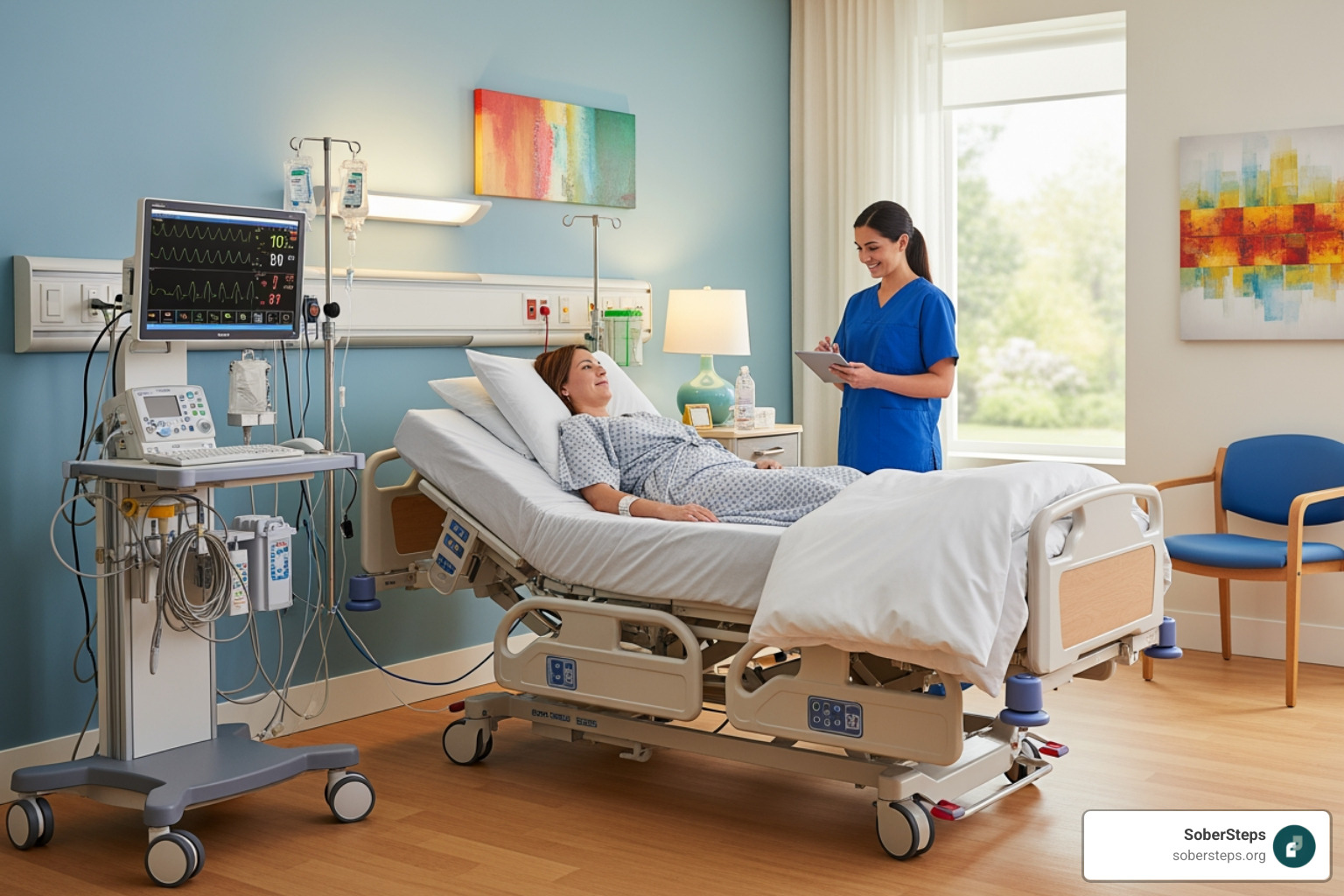
For many, the first clinical step is detoxification (“detox”), which safely manages withdrawal symptoms as substances leave the body. Withdrawal can be severe and even life-threatening, so medical supervision is critical to ensure safety and comfort, sometimes with the help of medication. Detox addresses physical dependence but is not a cure for addiction. It must be followed by comprehensive treatment to address the psychological aspects of the disease. SoberSteps can connect you with safe Medical Detox Programs. You can also learn more about Drug Withdrawal Information on our site.
Call to Action: Learn about safe detox at SoberSteps.
Step 3: Choosing the Right Treatment Setting
After detox, the next step is matching the individual to the appropriate level of care. There’s a continuum of care with varying intensities of support.
Our Levels of Care typically include:
- Inpatient Rehab: Provides 24/7 medical and therapeutic support in a structured, immersive facility. Ideal for those needing to get away from triggers. Learn more about Inpatient Rehab.
- Residential Treatment: Similar to inpatient but often for longer stays, focusing on intensive therapy and life skills.
- Partial Hospitalization Programs (PHP): Also called “day treatment,” this level offers intensive daily therapy while the patient lives at home. A step down from inpatient care.
- Intensive Outpatient Programs (IOP): More flexible than PHP, with fewer therapy hours per week, allowing patients to maintain work or school schedules.
- Outpatient Rehab: The least intensive option, with regular therapy sessions for those living at home with strong support systems. Explore Outpatient Rehab.
The choice depends on the SUD’s severity, co-occurring disorders, and social support. The goal is to provide the right support to foster lasting recovery.
Call to Action: Compare treatment settings at SoberSteps.
Call to Action: Contact us to discuss your best fit.
Core Components of Effective Treatment: Therapy and Medication
The core of how is addiction treated involves evidence-based behavioral therapies and, often, medication. This integrated strategy is customized to the individual and is proven to reduce substance use by 40-60%. It helps people develop coping skills and build a fulfilling life in recovery.
Call to Action: Discover evidence-based therapies at SoberSteps.
Call to Action: See how therapy and medication work together.
How is addiction treated with behavioral therapies?
Behavioral therapies are a cornerstone of treatment, helping individuals change behaviors related to substance use and develop coping skills. They can be delivered in various formats:
- Individual Therapy: One-on-one sessions to explore personal issues, trauma, and triggers, and develop personalized coping strategies.
- Group Therapy: Fosters community and reduces isolation by allowing individuals in recovery to share experiences and support one another.
- Cognitive Behavioral Therapy (CBT): Helps patients identify and change negative thought patterns and behaviors linked to substance use, teaching them to cope with relapse triggers.
- Dialectical Behavioral Therapy (DBT): Focuses on mindfulness, distress tolerance, emotion regulation, and interpersonal effectiveness to help manage difficult emotions without substance use.
- Motivational Interviewing (MI): A client-centered approach that strengthens a person’s own motivation to change by resolving ambivalence about recovery.
- Family Therapy: Involves loved ones to heal relationships, improve communication, and build a supportive home environment by educating the family about addiction.
Other approaches like Experiential Therapy and EMDR for trauma can also play a vital role. You can find more information under our Therapy Options section.
Call to Action: Explore our therapy programs.
How is addiction treated with medication?
Medication-Assisted Treatment (MAT) combines FDA-approved medications with therapy to treat certain addictions. It is highly effective at reducing cravings and managing withdrawal, which helps prevent relapse. MAT uses medication to stabilize brain chemistry, allowing individuals to better engage in therapy.
Here’s how medications are used for specific substances:
- Opioid Addiction: Medications like Methadone, Buprenorphine (Suboxone), and Naltrexone are crucial. They reduce cravings, ease withdrawal, and lower overdose risk. Our Opioid Rehab programs often incorporate MAT.
- Alcohol Addiction: Naltrexone, Acamprosate, and Disulfiram can reduce cravings and deter drinking. Learn more in our Alcohol Withdrawal Symptoms, Treatment, and Timeline guide.
- Nicotine Addiction: Nicotine Replacement Therapies (NRTs) and medications like Bupropion help reduce cravings and withdrawal symptoms.
For stimulants and cannabis, treatment currently relies on behavioral therapies, as there are no FDA-approved medications.
TABLE: Common Medications for Addiction Treatment
| Substance Addiction | Common Medications | How They Help |
|---|---|---|
| Opioids | Methadone, Buprenorphine (with/without Naloxone), Naltrexone | Reduce cravings, ease withdrawal, block opioid effects, prevent overdose. |
| Alcohol | Naltrexone, Acamprosate, Disulfiram | Reduce cravings, manage withdrawal, deter drinking. |
| Nicotine | Nicotine Replacement Therapies (NRTs), Bupropion, Varenicline | Reduce cravings, ease withdrawal symptoms. |
Call to Action: Learn about MAT at SoberSteps.
Addressing the Whole Person: Dual Diagnosis and Holistic Care
Effective treatment addresses the whole person, not just substance use. This is vital for “dual diagnosis,” where a substance use disorder coexists with a mental illness like depression or anxiety. Up to 60% of people with an SUD also have another mental illness. Integrated treatment, which addresses both conditions simultaneously, is the most effective strategy. Our programs for Mental Health and Substance Use Co-Occurring Disorders are designed for this.
Holistic care complements traditional treatment by recognizing the connection between physical, emotional, and spiritual well-being. It incorporates therapies to support overall health, such as:
- Nutrition: Promoting healthy eating to repair the body.
- Exercise: Reducing stress and improving mood.
- Mindfulness and Meditation: Managing stress and promoting emotional regulation.
- Yoga, Art, or Music Therapy: Creative outlets for expressing emotions.
By integrating these elements, holistic care builds a stronger foundation for sustained recovery. Our Holistic Addiction Recovery programs embody this philosophy.
Call to Action: Explore holistic recovery options.
Call to Action: See how we treat the whole person.
The Road to Recovery: Managing Relapse and Embracing Long-Term Wellness
Understanding how is addiction treated means recognizing recovery is a long-term process. Addiction is a manageable chronic condition, much like diabetes or asthma, that requires ongoing care. The goal is long-term wellness through continuous effort and support. A major barrier to care is stigma, which can cause shame and isolation. Reducing stigma is crucial, and we believe in treating addiction with the same medical compassion as any other illness.
Call to Action: Start building your recovery foundation.
Call to Action: Get support for long-term recovery.
Can Addiction Be Cured?
A common question is whether addiction can be cured. The answer is that while it cannot be “cured” in the sense that it disappears, it is a chronic condition that can be successfully managed for life. Like diabetes, effective management through treatment and lifestyle changes allows people to lead healthy, fulfilling lives. The goal is sustained recovery—maintaining abstinence or reduced use, improving overall functioning, and achieving a better quality of life. This is a lifelong journey of wellness. Our resources on Long-Term Recovery emphasize this commitment.
Call to Action: Learn about lifelong recovery.
Understanding and Managing Relapse
Relapse, a return to substance use after abstinence, is a common part of recovery and does not signify failure. Relapse rates for addiction (40-60%) are similar to other chronic illnesses like asthma. A relapse is a sign that the treatment plan needs adjustment. It’s an opportunity to strengthen coping skills and modify strategies. Key components of managing relapse include:
- Identifying Triggers: Understanding what can prompt cravings.
- Developing Coping Skills: Learning healthy ways to manage stress and cravings.
- Creating a Relapse Prevention Plan: A strategy for high-risk situations.
The most effective approach is to seek help immediately if a relapse occurs to resume or modify treatment.
Call to Action: Get help with relapse prevention.
The Critical Role of Family and Social Support
Addiction is often called a “family disease” because it impacts everyone close to the individual. Family involvement is therefore critical for recovery. Family therapy helps heal relationships, improve communication, and educate loved ones about the disease, which reduces blame and fosters support. Building a strong support network is also paramount for long-term recovery. This network can include:
- Family and Friends: Educated and supportive loved ones.
- Peer Support Groups: Organizations like Alcoholics Anonymous (AA) and Narcotics Anonymous (NA) offer invaluable community support.
- Therapists and Counselors: Ongoing professional guidance.
- Sober Communities: Connections with others in recovery.
This collective support system provides encouragement, accountability, and a sense of belonging, all vital for navigating recovery.
Call to Action: Learn about family support at SoberSteps.
Call to Action: See how family therapy can help.
Finding Your Path: Resources, Support, and Taking the First Step
Taking the first step toward recovery can be daunting, but you are not alone. Understanding how is addiction treated is the start; finding the right resources is the next step. Navigating treatment options, payment, and where to turn for help is a crucial part of the journey. SoberSteps simplifies this process, helping you explore options and connect with vetted providers through confidential support.
Call to Action: How to Find Rehab.
Call to Action: Get Help Now.
National Resources and Helplines for Immediate Help
When you need help, immediate access to reliable support can make all the difference. Several national resources are available:
- SAMHSA Behavioral Health Treatment Services Locator: An online tool to search for mental health and substance use treatment facilities in your area.
- 988 Suicide & Crisis Lifeline: Offers 24/7 confidential support for mental health crises.
- SoberSteps Confidential Addiction Helpline: Our 24/7 helpline connects you with compassionate support and guides you to treatment providers.
These resources are confidential, ensuring you can seek help without fear of judgment.
Call to Action: Call our confidential helpline now.
How to Pay for Addiction Treatment
Concerns about cost should never be a barrier to getting help. While financing treatment is a common worry, many options make quality care accessible.
- Insurance Coverage: Many health insurance plans cover addiction treatment under the Mental Health Parity and Addiction Equity Act (MHPAEA). Our Verify Insurance tool can help you understand your benefits. See the Mental Health and Addiction Insurance Help (HHS) for more guidance.
- Private Pay Options: Many facilities offer payment plans or sliding scale fees based on income.
- State-Funded Programs: Many states offer publicly funded treatment options for those with limited financial resources.
Our guide on How Do I Pay for Addiction Treatment? provides a comprehensive overview of your options.
Call to Action: Check your insurance coverage now.
Call to Action: Learn about payment options.
Conclusion
We’ve explored how is addiction treated, showing that addiction is a treatable brain disease, not a moral failing. The path to recovery involves several key steps: professional assessment, medical detox, and choosing the right level of care, from inpatient to outpatient programs.
Core treatment combines behavioral therapies (like CBT) and Medication-Assisted Treatment (MAT) with a holistic approach that addresses co-occurring mental health disorders. Recovery is a long-term journey where addiction is managed as a chronic condition. Relapse is a part of the process, not a failure, and strong family and social support are vital.
Hope and recovery are real. Effective treatments are available, and countless individuals have successfully reclaimed their lives. If you or a loved one is struggling, taking the first step is the bravest act of all. SoberSteps is here to provide confidential resources, connect you with vetted treatment providers, and offer the compassionate guidance you need.
Call to Action: Take the first step—contact SoberSteps now.
Call to Action: See all our treatment options.