Why Understanding Your Drug Rehab Options Matters
Drug rehab is professional treatment designed to help people overcome addiction to drugs and alcohol through a combination of medical care, therapy, and support. Here’s what you need to know:
- What it is: A structured treatment program addressing the root causes of addiction and providing tools for recovery
- Who needs it: The 52.6 million Americans aged 12+ who needed substance use treatment in 2024
- Where to find it: Over 16,000 specialized treatment centers across the United States
- Types available: Inpatient (residential), Outpatient (PHP, IOP), and various specialized programs
- How it works: Combines medical detox, behavioral therapies, medications (when appropriate), and ongoing support
- What it costs: Often covered by insurance, Medicare, and Medicaid; payment plans available
If you or a loved one is struggling with substance use, you’re not alone—and recovery is possible. Addiction is a chronic but treatable brain disorder. While not curable, it can be managed with the right help, much like other chronic conditions.
The path to recovery starts with understanding your options. This guide will walk you through recognizing the need for help, choosing the right program, and building a life of lasting sobriety. Finding confidential, judgment-free information is the first step.
At Sober Steps, we provide confidential resources and guidance to empower you on your recovery journey. We connect people with quality drug rehab options and support them every step of the way. Call us at (844) 491-5566 to speak with a caring specialist today.
Understanding Drug Rehab: The First Step to Recovery

Addiction is a complex but treatable brain disorder, not a moral failing. Understanding this is the first step toward recovery. It’s a chronic medical illness that requires professional intervention.
What is Drug Rehab and Why is it Necessary?
Drug rehab is a structured treatment process for addiction to drugs and/or alcohol. It combines medical care, therapy, and support systems to help people stop using substances, address the root causes of their addiction, and learn healthy coping skills for a sober life.
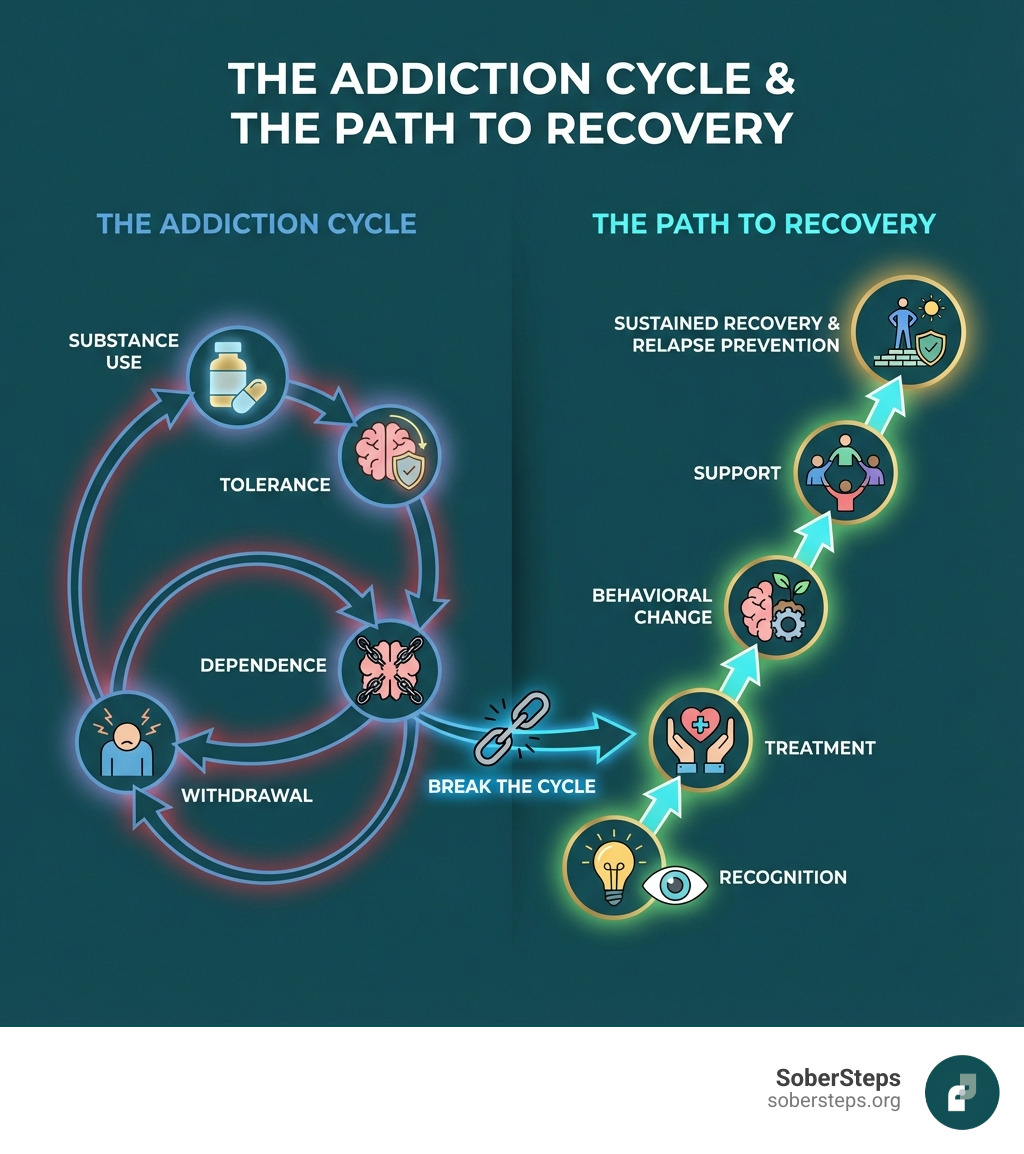
Addiction, or Substance Use Disorder (SUD), is a chronic disease that changes the brain. It alters brain chemistry related to reward, motivation, and impulse control. This leads to impaired judgment, intense cravings, and compulsive drug-seeking behavior despite negative consequences.
Because addiction alters the brain, simply “stopping” is often not enough. Professional drug rehab provides medical supervision for detox, therapy for behavioral patterns, and a supportive, trigger-free environment. This comprehensive approach addresses the physical, psychological, and social aspects of addiction, making it possible to break the cycle.
Recognizing the Need for Help
It can be hard to admit that you or a loved one needs drug rehab. The signs often accumulate over time. Here are common indicators that professional help is needed:
- Strained relationships: Prioritizing substance use over loved ones, leading to conflict and isolation.
- Neglecting responsibilities: Problems at work, school, or home due to substance use.
- Financial problems: Spending excessively on substances, leading to debt or legal issues.
- Social isolation: Withdrawing from hobbies and friends to use substances.
- Legal troubles: Arrests or other legal issues related to substance use.
- Physical health decline: Noticeable changes in appearance, new health problems, or overdose risks.
- Worsening mental health: Increased anxiety, depression, or mood swings.
- Failed attempts to quit: Trying to stop using on your own without success.
- Concerns from loved ones: Family and friends expressing worry.
- Relapsing: Returning to substance use after trying to stop.
About half of people with a substance use disorder also have a co-occurring mental illness like anxiety or depression. Integrated treatment for both is essential for recovery. If these signs are familiar, drug rehab can be a life-changing step. For confidential help, call us at (844) 491-5566.
Is Recovery a Cure? Understanding Addiction as a Chronic Condition
Addiction is a treatable, but not curable, chronic disorder. Like diabetes or heart disease, it can’t be cured, but it can be successfully managed with ongoing treatment and lifestyle changes.
Treatment helps people counteract addiction’s effects on the brain and behavior, enabling them to regain control and lead fulfilling lives.
Because addiction is chronic, relapse can happen. It doesn’t mean treatment failed, but that the plan needs adjustment. Relapse rates are similar to other chronic illnesses like asthma. Understanding this reduces stigma and encourages seeking help again without shame.
For more information on the chronic nature of addiction and the recovery journey, we recommend exploring NIDA’s guide on treatment and recovery.
Navigating Your Options: Types of Drug Rehab Programs
When considering drug rehab, it’s important to know that there isn’t a one-size-fits-all solution. Treatment options are diverse, designed to meet varying levels of need and accommodate different life circumstances. We often refer to these as “levels of care,” which form a continuum that allows individuals to step up or step down in intensity as their recovery progresses.
| Program Type | Intensity | Living Situation | Ideal Candidate – Individual Therapy: One-on-one sessions with a therapist to work on personal goals.
- Group Therapy: Peer support sessions to share experiences and build communication skills.
- Educational Workshops: Classes on addiction science, coping skills, and relapse prevention.
- Holistic Therapies: Activities like yoga, art therapy, or fitness.
- Lunch: A communal meal and a short break.
- Skill-Building Groups: Workshops on life skills like stress and anger management.
Evening Meetings and Personal Time (5:00 PM – 10:00 PM):
- Dinner: The final communal meal of the day.
- Evening Meetings: 12-Step meetings (AA/NA) or other peer support groups.
- Personal Time: Time for reading, reflection, or approved family calls.
- Lights Out: A set bedtime to promote healthy sleep, which is vital for recovery.
This structured schedule provides a safe, predictable environment where you can focus entirely on your healing. It helps build healthy routines, reduce stress, and integrate the lessons learned throughout the day.
Finding the Right Path to Drug Rehab: How to Choose a Quality Program

Choosing the right drug rehab program is a critical step. With thousands of options, it can be overwhelming. At SoberSteps, we help you ask the right questions to find a program that fits your unique needs.
What to Look for in a Quality drug rehab Program
A quality drug rehab program builds a foundation for a fulfilling, substance-free life. Here are key factors to look for:
- Accreditation and Licensing: Look for accreditation from CARF or The Joint Commission and ensure all staff are licensed. This signals high standards of care and safety.
- Evidence-Based Therapies: The program should use proven methods like Cognitive Behavioral Therapy (CBT), Dialectical Behavioral Therapy (DBT), and Motivational Interviewing. For opioid addiction, Medication-Assisted Treatment (MAT) should be an option.
- Individualized Treatment Plans: A quality program creates a personalized plan based on your specific needs, substance use history, and any co-occurring mental health conditions.
- Integrated Treatment for Co-occurring Disorders: Effective programs treat addiction and mental health conditions (like depression or anxiety) at the same time for better outcomes.
- Comprehensive Services: A good program offers more than just therapy, including medical detox, educational workshops, and holistic options like yoga or mindfulness.
- Qualified and Compassionate Staff: The team should include experienced, licensed professionals who are empathetic and understanding.
- Aftercare Planning: A quality program plans for your post-rehab life from day one, arranging for sober living, support groups, and ongoing therapy.
- Family Involvement: Programs should offer family therapy and education, as family support is crucial for recovery.
Paying for Care: Costs, Insurance, and Medicare Coverage
The cost of drug rehab is a common concern, but many options can make it affordable. Investing in recovery is an investment in your future.
- Private Insurance: Most private health insurance plans cover drug rehab services, as addiction treatment is an essential health benefit under the ACA. We can help you verify your coverage.
- Medicare Coverage: For eligible individuals, Medicare provides coverage for drug rehab:
- Medicare Part A (Hospital Insurance) covers inpatient hospital services.
- Medicare Part B (Medical Insurance) covers outpatient services like PHP and IOP, as well as doctor’s visits.
- Medicare Part D (Prescription Drug Coverage) helps cover medications needed for addiction and mental health treatment.
- Medicaid Options: Medicaid coverage varies by state and can supplement Medicare. Contact your State Medical Assistance (Medicaid) office for details.
- Payment Plans and Financial Assistance: Many centers offer payment plans, sliding scale fees, or help with grants. Don’t let cost be a barrier to getting help.
We understand that navigating insurance can be confusing. Call us at (844) 491-5566, and we can help you understand your choices and find a program that fits your budget.
The Role of Family and Friends in Recovery
Addiction is a family disease. As a family member or friend, your support is invaluable in encouraging someone to seek drug rehab and in their long-term recovery.
Here’s how you can help:
- Educate Yourself: Learn about addiction as a disease to approach the situation with empathy.
- Build a Support Network: Work with other concerned loved ones to present a united front.
- Communicate with Empathy: Talk to your loved one with care, focusing on your concern for their well-being.
- Help with Research: Assist in finding treatment options. Call us at (844) 491-5566 for confidential resources.
- Offer Emotional Support: Be there for them throughout the entire process.
- Provide Practical Help: Assist with childcare, transportation, or other logistics.
- Set Healthy Boundaries: Support them without enabling their addiction. Protect your own well-being.
- Participate in Family Therapy: Engage in family therapy to heal relationships and learn how to support their recovery.
You cannot recover for your loved one, but you can be a powerful ally on their journey. Remember to tend to your own needs as well.
Life After Rehab: Sustaining Sobriety and Preventing Relapse
Completing drug rehab is a huge achievement, but it’s the first step in a lifelong recovery journey. Sustaining sobriety requires ongoing effort and support, and we are here to help.
Aftercare and Continuing Support
Aftercare bridges the gap between intensive drug rehab and daily life. It provides structure and support, significantly reducing the risk of relapse.
Common components of aftercare include:
- Sober Living Homes: A structured, substance-free environment with peer support to practice recovery skills.
- Alumni Programs: Rehab-based networks offering community, connection, and ongoing support.
- Support Groups: Peer-led groups like Alcoholics Anonymous (AA), Narcotics Anonymous (NA), or SMART Recovery offer free, long-term fellowship and shared experience, which are invaluable for sobriety.
- Ongoing Therapy: Continued therapy helps reinforce coping skills and provides professional guidance.
Understanding and Managing Relapse
Relapse is a common part of recovery from a chronic disease like addiction. It is not a failure, but a sign that the treatment plan needs to be adjusted.
Key strategies for managing relapse include:
- Identify Personal Triggers: Learn to recognize the people, places, and feelings that cause cravings.
- Develop Coping Strategies: Use healthy tools like mindfulness, exercise, or calling a sponsor to manage stress.
- Create a Relapse Prevention Plan: Have a clear plan for what to do when faced with triggers.
- Take Prompt Action: If a relapse happens, contact a healthcare provider immediately to adjust your treatment plan and get back on track.
Recovery is a journey of growth and resilience. Every day you choose sobriety is a victory. For confidential support at any stage, call us at (844) 491-5566.
Frequently Asked Questions about Drug Rehab
Here are answers to some common questions about drug rehab.
Can you be forced to go to rehab?
Generally, an adult cannot be forced into drug rehab. However, there are some exceptions:
- Legal Interventions: A court can order treatment as an alternative to jail time or as a condition of probation.
- Family Interventions: A professionally-led intervention can create strong pressure to seek treatment by setting clear consequences for not doing so.
- Involuntary Commitment Laws: Some states have laws (like the Marchman Act) that allow for court-ordered treatment if a person is a danger to themselves or others.
While these methods can initiate treatment, personal motivation is key for long-term success in drug rehab.
What is the success rate of drug rehab?
The “success rate” of drug rehab is more than just abstinence; it includes improved health, relationships, and quality of life.
Because addiction is a chronic illness, it’s best viewed as a manageable condition, not a curable one. Relapse rates are similar to other chronic diseases like asthma. A relapse indicates a need to adjust treatment, not that it has failed.
Factors influencing positive outcomes include:
- Duration of Treatment: Longer treatment times (90+ days) are often more effective.
- Aftercare: Ongoing support through aftercare programs improves long-term success.
- Integrated Treatment: Treating co-occurring mental health issues is crucial.
- Personal Motivation: The individual’s commitment is a key factor.
Recovery is a lifelong journey, and every step toward a healthier life is a success.
Can I use my phone and have visitors in rehab?
Policies on phone use and visitors vary by facility and level of care.
- Phone Use: In residential rehab, phone use is often restricted at first to help you focus on recovery. Access typically increases as you progress. Outpatient programs are more flexible.
- Visitors: Residential programs have scheduled visiting hours for pre-approved family and friends, often incorporating family therapy. In outpatient treatment, you live at home but will be encouraged to set healthy boundaries.
The primary reason for these policies is to create a safe, healing environment that prioritizes your recovery. It’s always best to inquire about specific communication and visitation policies when choosing a drug rehab program. For more specific questions, call our confidential helpline at (844) 491-5566.
Your Confidential Path to a New Beginning
We understand that taking the first step towards drug rehab can feel daunting, but remember, recovery is achievable. Millions of Americans have found their way to lasting sobriety, and you can too. The hope for a healthier, more fulfilling future is within reach.
At SoberSteps, we are committed to providing confidential and anonymous help, guiding you through the process of finding the right path for your unique needs. You don’t have to steer this alone.
Call us at (844) 491-5566 to speak with a caring specialist today. We’re here 24/7 to answer your questions, discuss your options, verify your insurance, and help you take that crucial first step towards reclaiming your life.
Explore specialized programs like our Female Rehab Centers