Understanding Substance Abuse Treatment: Your Path to Recovery
Substance abuse treatment is a comprehensive approach to helping individuals overcome addiction and reclaim their lives. If you’re looking for treatment options, here’s what you need to know:
Key Treatment Options Available:
- Outpatient Programs – Attend therapy while living at home
- Inpatient/Residential Care – 24-hour supervised treatment in a facility
- Medication-Assisted Treatment (MAT) – Combines medication with counseling
- Behavioral Therapy – Individual, group, or family counseling sessions
- Detoxification – Medically supervised withdrawal management
In 2022, more than one in six Americans aged 12 or older reported experiencing a substance use disorder (SUD). Yet here’s the encouraging truth: addiction is a treatable, chronic disease. Just as someone with diabetes can manage their condition with the right care, people with SUDs can recover and thrive with proper treatment and support.
Recovery is not only possible—it’s happening every day.
This guide will help you understand what substance abuse treatment looks like, explore the different options available, and show you how to take that crucial first step toward healing. Whether you’re seeking help for yourself or a loved one, you’ll find clear, practical information to guide your journey.
At Sober Steps, we are dedicated to providing confidential and supportive resources to help you steer substance abuse treatment options and connect with the care you need. Our team understands that finding the right help can feel overwhelming, which is why we’re here to guide you through every step of your recovery journey. Call us at (844) 491-5566 for confidential help.
Understanding Substance Use Disorder (SUD): Signs, Causes, and Effects
A substance use disorder (SUD) is a complex condition that can affect anyone. It is characterized by cognitive, behavioral, and physiological symptoms indicating an individual continues using a substance despite significant substance-related problems. Recognizing the signs early is crucial for seeking effective substance abuse treatment.
What are the Signs and Symptoms of SUD?
The symptoms and effects of SUD can vary widely depending on the substance used, but they generally fall into categories of intoxication and withdrawal, alongside broader behavioral, physical, and psychological changes.
Signs of Substance Use Disorder (as defined by the American Psychiatric Association’s DSM-5 criteria) include:
- Using more than intended: Taking the substance in larger amounts or over a longer period than intended.
- Strong desire or urge: Experiencing intense cravings or a strong desire to use the substance.
- Unsuccessful efforts to cut down: Trying but failing to reduce or control substance use.
- Spending significant time: Spending a lot of time obtaining, using, or recovering from the substance.
- Neglecting responsibilities: Failing to fulfill major obligations at work, school, or home.
- Continuing use despite relationship problems: Continuing use even when it causes or worsens social or interpersonal problems.
- Giving up activities: Reducing or abandoning important social, occupational, or recreational activities.
- Using despite danger: Using the substance in situations where it is physically hazardous.
- Continuing use despite health problems: Continuing use despite having a persistent physical or psychological problem that is likely caused or worsened by the substance.
- Tolerance: Needing markedly increased amounts of the substance to achieve the desired effect, or a diminished effect with continued use of the same amount.
- Withdrawal: Experiencing withdrawal symptoms, which are relieved by taking the substance or a closely related one.
For a deeper dive into the research-based principles of addiction treatment, consult resources like the Principles of Drug Addiction Treatment.
Here’s a simplified comparison of common immediate effects (intoxication) versus withdrawal symptoms:
| Symptom Category | Intoxication (Immediate, Short-Term Effects) | Withdrawal (Effects When Substance Leaves Body) |
|---|---|---|
| Mood/Mental | Euphoria, excitement, calm, anxiety, paranoia, altered judgment, impaired decision-making | Intense anxiety, irritability, depression, mood swings, difficulty concentrating, cravings |
| Physical | Sleepiness, slurred speech, slowed breathing, increased heart rate, dilated pupils, numbness, intense energy, impaired coordination | Nausea, vomiting, diarrhea, sweating, tremors, muscle cramping, body aches, headaches, seizures |
| Functioning | Impaired physical and mental functioning, reduced inhibitions | Difficulty sleeping, restlessness, fatigue |
What Causes SUD and Who is at Risk?
The exact cause of SUD is not fully understood, but we know it’s a complex interplay of various factors. Research suggests that changes to the brain’s reward system due to a substance’s addictive potential play a significant role. Addiction is increasingly understood as a brain disease, not a moral failing.
Common causes and risk factors for developing a SUD include:
- Brain’s reward system: Substances can hijack the brain’s natural reward system, leading to intense cravings and compulsive use.
- Genetic predisposition: If you have a biological relative with a SUD, your risk may be higher due to inherited genetic susceptibility.
- Environmental factors: Easy access to substances, social pressure, and cultural norms can increase risk.
- Co-occurring mental health disorders: About half of people with a SUD also experience a serious mental illness. Conditions like anxiety, depression, ADHD, or PTSD can increase vulnerability, as individuals may use substances to self-medicate.
- History of adverse childhood experiences (ACEs): Trauma and stress during childhood can significantly increase the risk of developing a SUD later in life.
- Early exposure to substances: Starting substance use at a young age, especially during critical periods of brain development, can heighten the risk.
- Social pressures: Curiosity, the desire for performance improvement, or using substances as an emotional escape can all contribute to the progression of substance use.
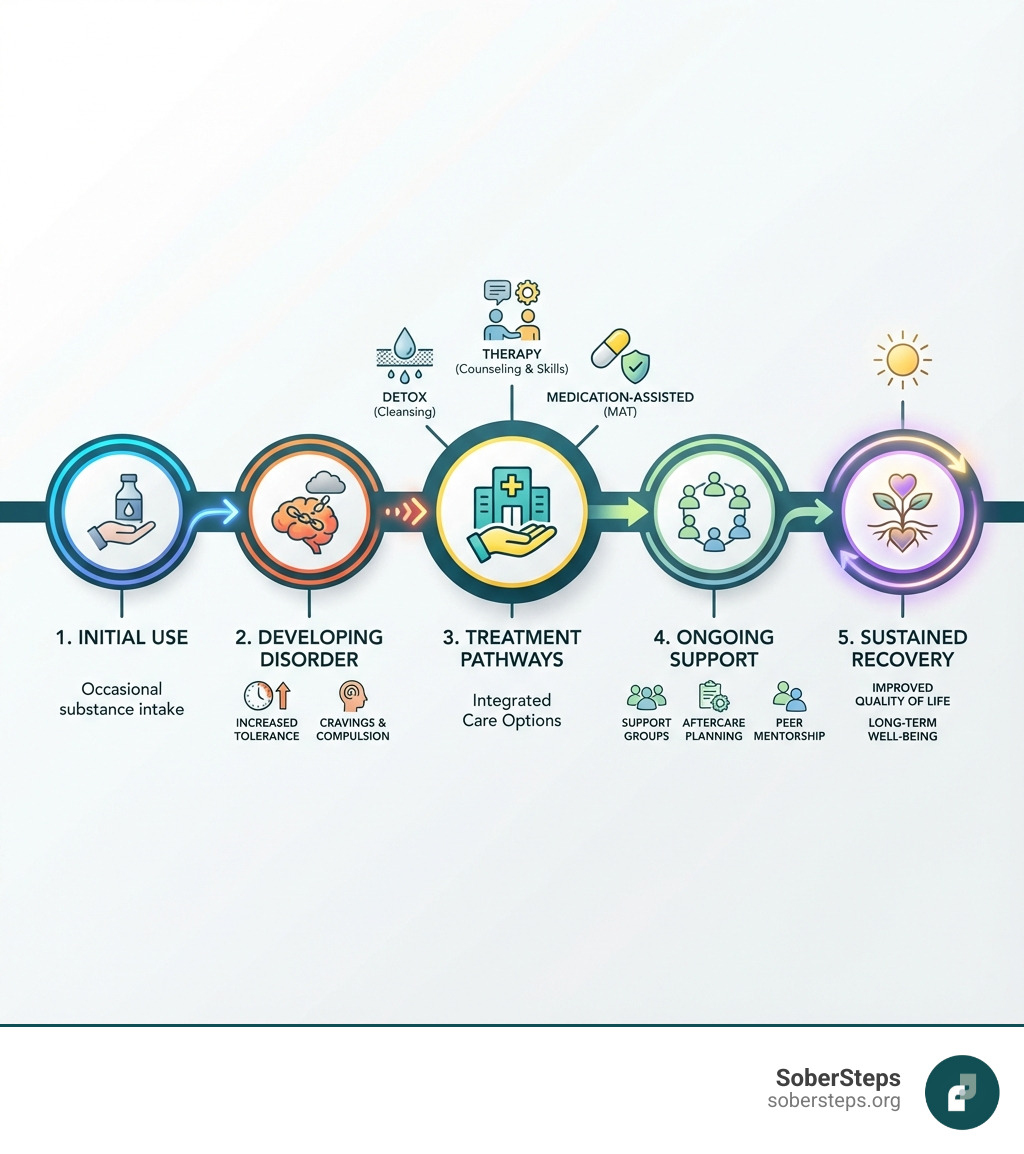
The development of a SUD often follows a pattern: from experimental or prescription use to occasional use, then heavy use, and finally, a full-blown substance use disorder.
What are the Different Types and Long-Term Complications?
Substance use disorders can manifest with various substances, each with its unique profile of effects and complications. Common types of SUDs include:
- Alcohol Use Disorder: Involving the compulsive use of alcohol.
- Opioid Use Disorder: Related to prescription painkillers (e.g., oxycodone, hydrocodone) or illicit opioids (e.g., heroin, fentanyl).
- Stimulant Use Disorder: Involving substances like cocaine, methamphetamine, or prescription stimulants (e.g., Adderall, Ritalin).
- Sedative, Hypnotic, or Anxiolytic Use Disorder: Involving benzodiazepines (e.g., Xanax, Valium) or barbiturates.
- Cannabis Use Disorder: Involving marijuana.
- Hallucinogen Use Disorder: Involving substances like LSD, psilocybin, or MDMA.
- Inhalant Use Disorder: Involving volatile substances that are inhaled.
- Tobacco Use Disorder: Involving nicotine products.
The long-term complications of untreated SUD can be severe and affect nearly every aspect of an individual’s life:
- Physical Health Complications: Overdose (which can be fatal), various forms of cancer, liver damage, cardiovascular disease, respiratory problems, and infections such as hepatitis B, hepatitis C, and HIV (especially for injection drug users).
- Mental Health Complications: Worsening or development of depression, anxiety disorders, psychosis, memory loss, and other cognitive impairments.
- Academic and Career Challenges: Significant difficulties in maintaining employment or performing well in school, leading to job loss or academic failure.
- Interpersonal Relationship Difficulties: Strain, conflict, and breakdown of relationships with family, friends, and partners.
- Legal Issues: Arrests, incarceration, and other legal consequences due to substance-related behaviors.
- Engaging in Unsafe or At-Risk Behaviors: Increased likelihood of accidents, violence, and other dangerous situations.
Seeking substance abuse treatment is vital to mitigate these risks and improve long-term health and well-being.
The Core Components of Effective Substance Abuse Treatment

Effective substance abuse treatment is not a one-size-fits-all solution. Just as every individual’s journey into addiction is unique, so too is their path to recovery. We understand that what works for one person may not work for another. The most successful treatment plans are personalized, comprehensive, and often incorporate a biopsychosocial model, addressing biological, psychological, and social factors contributing to SUD. This approach recognizes that addiction impacts multiple areas of a person’s life and requires a multifaceted response.
Levels of Care: From Outpatient to Inpatient Programs
Treatment for SUD is delivered across a continuum of care, designed to match the intensity of services to an individual’s specific needs. The goal is to provide the least restrictive yet most effective environment for recovery.
Detoxification (Detox): This is often the first step in substance abuse treatment, focusing on medically supervised withdrawal management. The goal is to help individuals stop substance use safely and as quickly as possible, managing acute physical symptoms of withdrawal. While crucial, detox alone is rarely sufficient for long-term recovery and should always be followed by formal addiction treatment. Medication-assisted withdrawal is often used during this phase.
Outpatient Care:
- Standard Outpatient: Involves scheduled sessions (less than 9 hours per week) that allow individuals to live at home, attend work or school, and continue with daily responsibilities while receiving counseling and therapy. It’s best for those with a strong support system and a less severe SUD.
- Intensive Outpatient Programs (IOP) / Partial Hospitalization Programs (PHP): These levels offer more frequent and structured treatment than standard outpatient, typically requiring a minimum of 9 hours of weekly attendance (IOP) or more intensive, hospital-like care during the day (PHP). They include one-on-one appointments, group sessions, and coping skills learning, allowing individuals to return home each night.
Inpatient/Residential Rehabilitation:
- Inpatient Care: Involves staying at a hospital or treatment program overnight for a few days or weeks, typically for individuals needing 24-hour medical care or supervision for severe mental health or substance misuse.
- Residential Care: Individuals live at a treatment program for an extended period, ranging from a few weeks to months, or even a year or more for more serious conditions. These structured environments help individuals escape daily distractions and temptations, focusing entirely on recovery.
Interim Care: For those facing long waitlists for formal treatment, interim care can provide immediate support, such as daily medicine and emergency counseling, to ensure safety until a spot in a more comprehensive program becomes available.
For more details on these different approaches, you can explore resources like Treatment Types for Mental Health, Drugs and Alcohol.
The Role of Behavioral Health and Therapy
Behavioral therapies are the cornerstone of effective substance abuse treatment. These therapies help individuals change their attitudes, behaviors, and thoughts related to substance use, teaching them essential coping skills and strategies for maintaining sobriety.
- Individual Therapy: One-on-one sessions with a therapist to explore personal issues, triggers, and underlying psychological factors contributing to substance use. Therapies like Cognitive Behavioral Therapy (CBT) and Motivational Interviewing (MET) are commonly used.
- Group Therapy: Provides a supportive environment where individuals can share experiences, learn from peers, and develop social skills necessary for recovery.
- Family Therapy: Involves family members in the treatment process, addressing family dynamics that may contribute to substance use and helping to rebuild healthy relationships. For adolescents, family involvement is particularly crucial.
- Cognitive Behavioral Therapy (CBT): Helps individuals identify and change problematic thinking patterns and behaviors that lead to substance use. It teaches coping mechanisms for cravings and high-risk situations.
- Motivational Interviewing (MET): Focuses on strengthening an individual’s motivation and commitment to change, helping them resolve ambivalence about engaging in substance abuse treatment and stopping drug use.
- Other Behavioral Therapies: Include Contingency Management (CM, offering rewards for positive behaviors), Community Reinforcement Approach (CRA, making a non-drug-using lifestyle more rewarding), and specialized therapies for adolescents like Multisystemic Therapy (MST) and Multidimensional Family Therapy (MDFT).
Behavioral health care providers also play a crucial role in assisting individuals with co-occurring mental health concerns, ensuring integrated treatment for both conditions.
Understanding Medication-Assisted Treatment (MAT)
Medication-Assisted Treatment (MAT) is a highly effective, evidence-based approach that combines medication with counseling and behavioral therapies. MAT is particularly vital for certain SUDs, as it can significantly reduce cravings, manage withdrawal symptoms, and help prevent relapse.
- MAT Definition: It’s the use of FDA-approved medications, in combination with therapy, to treat substance use disorders. It’s a critical component of care for many individuals.
- Reducing Cravings and Withdrawal: Medications can stabilize brain chemistry, block the euphoric effects of substances, or reduce physical cravings and withdrawal symptoms, making it easier for individuals to engage in therapy and focus on recovery.
- Medications for Opioid Use Disorder (MOUD): These are particularly effective in helping people reduce illegal opioid use, stay in treatment longer, and significantly reduce the risk of opioid-involved overdose. The FDA-approved medications include:
- Buprenorphine: Can be prescribed in office-based settings by qualified physicians, increasing access to care.
- Methadone: Typically provided in specialized Opioid Treatment Programs (OTPs).
- Naltrexone: Blocks opioids from binding to their receptors and prevents their euphoric effects.
Using medications like methadone and buprenorphine is not simply replacing one addiction with another. These are controlled medications that stabilize individuals, reduce cravings, and allow them to address underlying issues in therapy.
- Medications for Alcohol Use Disorder: Medications like Acamprosate, Disulfiram, and Naltrexone are also FDA-approved and can be valuable tools in managing alcohol dependence and preventing relapse.
For more information, visit Medication-Assisted Treatment (MAT) | SAMHSA.
Navigating Your Path to Recovery
Taking the first step toward recovery can feel daunting, but it’s a profound act of courage and self-care. We understand that recovery is an ongoing journey, not a destination. It requires sustained effort, support, and a commitment to building a healthier future. The good news is that you don’t have to steer this path alone.
How to Find Substance Abuse Treatment Services and Support
Finding the right substance abuse treatment can be a critical turning point. We want to make this process as clear and accessible as possible for you.
- Contact SoberSteps for confidential guidance: We offer a confidential and anonymous platform to help you find treatment services. Our team can help you understand your options and connect you with appropriate care. Call us today at (844) 491-5566.
- Consult your primary care physician: Your doctor can provide an evaluation, offer advice on appropriate treatment settings, and make referrals to specialists. Being honest about your substance use with your healthcare provider is crucial for accurate diagnosis and treatment planning.
- Use national helplines and government resources: Organizations like the Substance Abuse and Mental Health Services Administration (SAMHSA) provide comprehensive resources. Their Behavioral Health Treatment Services Locator is an excellent tool to find facilities near you: Behavioral Health Treatment Services (SAMHSA).
- Understand your insurance coverage: Many treatment programs accept various health insurance plans. It’s important to understand what your plan covers. You can find help with this at the Mental Health and Addiction Insurance Help (HHS).
- Vetting treatment centers: When considering a treatment center, ask about their treatment philosophies, types of therapy offered, staff qualifications, success rates, and aftercare planning. We can help you with this vetting process to ensure you find a program that meets your needs. Call us at (844) 491-5566 for assistance.
The Recovery Process: What to Expect After Treatment
Completing a formal treatment program is a significant achievement, but it’s often just the beginning of the recovery journey. Recovery is a long-term process that requires ongoing support and strategies to prevent relapse.
- Aftercare Planning: Before leaving a formal treatment program, a comprehensive aftercare plan is developed. This plan outlines continued support, therapy, and resources to help you maintain sobriety.
- Sober Living Environments: For some, transitioning to a sober living home provides a supportive, drug-free environment that bridges the gap between intensive treatment and independent living.
- Relapse Prevention Strategies: You’ll learn and practice strategies to identify triggers, cope with cravings, and manage high-risk situations. This includes developing healthy coping mechanisms and building a strong support network.
- Building a New Life: Recovery is about more than just abstaining from substances; it’s about rebuilding your life. This often involves addressing academic or career challenges, repairing relationships, and developing new hobbies and interests that support a healthy lifestyle.
- Importance of Continued Support: Long-term follow-up and ongoing engagement in support systems are critical for sustained recovery. This might include continued therapy, regular check-ins with healthcare providers, and participation in peer support groups.
Key Resources for Immediate Help and Information
If you or someone you know needs immediate assistance, these resources can provide crucial support:
- 988 Suicide & Crisis Lifeline: For free and confidential support for people in distress, available 24/7. Call or text 988. Visit their website: 988 Suicide & Crisis Lifeline.
- SoberSteps Helpline: For immediate, confidential help finding a program that fits your needs, call us at (844) 491-5566.
- Peer Support Groups: These groups offer community-level social support and are vital for many in recovery. Organizations like Alcoholics Anonymous (AA), Narcotics Anonymous (NA), and other 12-Step programs, as well as alternatives like Rational Recovery or Women for Sobriety, provide a space to share experiences and decrease feelings of shame and isolation.
Overcoming Barriers: Stigma and Support Systems
Addiction thrives in isolation, and stigma is a powerful barrier that keeps individuals from seeking the help they desperately need. At SoberSteps, we believe that understanding and support are key to overcoming these obstacles and fostering a community where healing can flourish.
How We Can Reduce the Stigma of Addiction
The stigma surrounding addiction is a significant barrier to seeking substance abuse treatment. It often stems from the misconception that addiction is a moral failing rather than a complex, treatable chronic disease. We can collectively work to reduce this stigma:
- Using Person-First Language: Instead of saying “addict,” we can say “person with a substance use disorder.” This simple shift emphasizes the individual, not their disease, promoting dignity and respect.
- Educating Others that Addiction is a Disease: We must continually reinforce the fact that addiction is a chronic disease that changes the brain, altering decision-making and inhibitory control. It’s comparable to other chronic medical conditions like diabetes or asthma, requiring ongoing management.
- Sharing Recovery Stories: When individuals in recovery share their experiences, it humanizes the disease, inspires hope, and demonstrates that recovery is not only possible but achievable.
- Advocating for Better Policies and Access to Care: Supporting policies that expand access to evidence-based substance abuse treatment and mental health services, and advocating for insurance parity, helps ensure that care is available to all who need it.
By changing our language, increasing our understanding, and speaking out, we can create a more compassionate and supportive environment for those seeking help.
The Importance of Family and Peer Support
A strong support system is invaluable in recovery. Family and peers can play critical roles in motivating individuals to enter and stay in substance abuse treatment.
- Family Therapy Benefits: Family therapy can be instrumental in addressing underlying family dynamics, improving communication, and rebuilding trust. The involvement of family members can strengthen and extend the benefits of treatment, creating a more supportive home environment.
- Support for Families and Loved Ones: It’s not just the individual with SUD who needs support. Family members and loved ones often benefit from their own support groups, such as Al-Anon or Nar-Anon, which help them cope with the challenges of a loved one’s addiction.
- Peer Recovery Specialists: These individuals, who have lived experience in recovery, provide invaluable support, mentorship, and guidance to others navigating their own recovery journeys. Peer recovery support is a recognized and effective type of care.
- Specialized Support Environments: Sometimes, specific needs require specialized environments. For example, Female Rehab Centers offer gender-specific programming that addresses unique challenges and trauma often experienced by women, fostering a safe and understanding space for healing.
Frequently Asked Questions about Substance Abuse Treatment
We know you might have many questions about substance abuse treatment. Here, we address some of the most common ones to provide you with clear, concise answers.
How long does substance abuse treatment last?
The duration of substance abuse treatment varies significantly and is highly individualized. It depends on the type and severity of the substance use disorder, the presence of co-occurring mental health conditions, and individual needs and progress.
- While some programs are structured for 30, 60, or 90 days, research from the National Institute on Drug Abuse (NIDA) indicates that participation for less than 90 days is often of limited effectiveness. Longer durations are generally recommended for better outcomes.
- For certain treatments, such as methadone maintenance for opioid use disorder, 12 months is considered a minimum, with many individuals benefiting from treatment for many years.
- Recovery is a long-term process, and treatment plans are continuously assessed and modified to meet changing needs, often requiring multiple episodes of care and ongoing support.
How can I pay for treatment?
Concerns about the cost of substance abuse treatment are common, but there are many options available to make care accessible.
- Health Insurance Coverage: Most private and public health insurance plans, including Medicaid and Medicare, cover substance abuse treatment. The Mental Health Parity and Addiction Equity Act (MHPAEA) requires most health plans to cover mental health and substance use disorder services at the same level as medical/surgical care.
- State-Funded Programs: Many states offer publicly funded programs or grants for individuals who do not have insurance or have limited financial resources.
- Sliding Scale Fees: Some treatment centers offer a sliding scale fee structure, where the cost of treatment is adjusted based on your income and ability to pay.
- Financing Options: Some facilities offer payment plans or connect individuals with healthcare financing options.
- Resources for Help: We encourage you to explore resources like the Mental Health and Addiction Insurance Help (HHS) to understand your rights and options. Our team at SoberSteps can also help you steer these options. Call us at (844) 491-5566 for confidential assistance.
Is addiction a curable disease?
Addiction is widely recognized as a chronic, manageable disease, not a curable one in the traditional sense. This means:
- Chronic, Manageable Disease: Like other chronic conditions such as diabetes or hypertension, addiction cannot be “cured” but can be successfully managed. With appropriate substance abuse treatment and ongoing support, individuals can achieve and maintain long-term recovery.
- Recovery is a Lifelong Process: Recovery involves continuous effort, self-management, and engagement with support systems. It’s a journey of learning to live a fulfilling life without the compulsive use of substances.
- Relapse Does Not Mean Failure: Relapse is a common part of the recovery process for chronic diseases. If a relapse occurs, it signifies that treatment needs to be reinstated or adjusted, not that the individual has failed. It’s an opportunity to learn and strengthen recovery strategies.
With the right tools and support, a life free from active addiction is absolutely possible.
Your First Step Towards a New Life
We understand that reaching out for help with substance abuse treatment can be one of the most challenging, yet courageous, decisions you’ll ever make. But know this: recovery is possible for everyone. Treatment provides the essential tools, strategies, and support needed to build a healthier, more fulfilling future. Reaching out is not a sign of weakness; it is a profound sign of strength.
At SoberSteps, we provide confidential and anonymous resources, ensuring you can explore your options in a safe and supportive environment. Our team is here to guide you, answer your questions, and connect you with the right substance abuse treatment program custom to your unique needs. You can reach us anytime at (844) 491-5566.
For immediate, confidential help finding a program that fits your needs, call us at (844) 491-5566 or explore specialized options like our resources for women’s recovery programs. Your journey to healing starts here.