Why Finding the Right Addiction Treatment Matters
If you need to find addiction treatment, here are the fastest ways to get help:
- Call the confidential SoberSteps helpline: (844) 491-5566 (24/7 support)
- Use FindTreatment.gov: Search 21,000+ treatment providers nationwide
- Text or call 988: For immediate crisis support
- Contact SAMHSA’s National Helpline: 1-800-662-HELP (4357) for free, confidential referrals
Find addiction treatment is more than just a search query—it’s often the first step in a life-changing journey. Millions of Americans struggle with substance use disorders, a chronic disease that changes the brain and affects decision-making. About half of people with substance use disorders also experience serious mental illness, making the search for appropriate care even more critical.
The good news? Recovery is not just possible; it’s achievable with the right support.
Finding treatment can feel overwhelming when you’re already struggling. You might not know where to start, what type of care you need, or how to pay for it. You may worry about privacy or feel isolated by stigma. These barriers keep too many people from getting help.
But resources exist to guide you through this process. From confidential helplines to searchable directories of over 21,000 treatment providers, help is more accessible than ever. Insurance often covers up to 100% of treatment costs, and payment assistance programs exist for those without coverage.
At Sober Steps, we’re dedicated to empowering individuals on their journey to recovery by providing confidential resources to find addiction treatment that fits your unique needs. We connect you with treatment options, educational resources, and support every step of the way. Call our confidential helpline at (844) 491-5566 to get started.
Understanding the Landscape of Addiction Treatment
When you decide to find addiction treatment, one of the first things you’ll find is the wide array of options available. This can be both reassuring and a little confusing. Our goal in this section is to explain the different levels of care and services, helping you understand what might be the right fit for you or your loved one. Addiction is a chronic disease, and effective treatment often involves a combination of approaches custom to individual needs.

Levels of Care: From Detox to Aftercare
Addiction treatment isn’t a one-size-fits-all solution. Different levels of care are designed to address varying degrees of addiction severity and individual circumstances.
- Withdrawal Management (Detoxification): Often the first step, detoxification safely manages the physical symptoms of withdrawal when someone stops using substances. This process can be medically challenging and even dangerous, so it’s usually conducted under medical supervision. The goal is to stabilize the individual physically before they transition into further treatment.
- Residential Treatment: Also known as inpatient treatment, this involves living at a facility 24/7 in a highly structured environment. It provides an immersive experience, removing individuals from triggers and allowing them to focus entirely on their recovery. Residential programs typically include individual and group therapy, educational sessions, and recreational activities. This level of care is often recommended for severe addictions or when an individual needs a complete change of environment.
- Partial Hospitalization Programs (PHPs): PHPs offer a high level of structured care, similar to residential treatment, but individuals return home or to a sober living environment in the evenings. This allows for intensive daily therapy while providing some flexibility and connection to outside life.
- Intensive Outpatient Programs (IOPs): IOPs provide a step down from PHPs, with fewer hours of therapy per week. Participants attend sessions several times a week, allowing them to maintain work, school, or family responsibilities while receiving substantial support.
- Outpatient Programs (OPs): The least intensive level of care, OPs involve regular, but less frequent, therapy sessions. This option is suitable for individuals with mild to moderate substance use disorders, those transitioning from more intensive programs, or those with strong support systems at home. It offers significant flexibility.
- Sober Living Homes: These are supportive, substance-free living environments that bridge the gap between intensive treatment and full independent living. They provide a structured setting, peer support, and accountability, helping individuals practice recovery skills in real-world situations. Recovery bridge housing, as mentioned in some state programs, falls into this category.
To help you visualize the differences, here’s a comparison:
| Feature | Residential Treatment (Inpatient) | Outpatient Treatment (OP/IOP/PHP) |
|---|---|---|
| Time Commitment | 24/7 residency, typically 30-90 days or longer | Varies from a few hours/week to full days (PHP), return home daily |
| Living Situation | Live at the treatment facility | Live at home or in a sober living environment |
| Intensity | High; constant supervision, structured schedule, immersive | Moderate to high (PHP/IOP), lower (OP); balance with daily life |
| Cost | Generally higher due to 24/7 care and amenities | Generally lower, more flexible |
| Environment | Removed from triggers, focus solely on recovery | Steer daily life challenges, apply skills in real-time |
The Role of Medication-Assisted Treatment (MAT)
Medication-Assisted Treatment (MAT) is a highly effective, evidence-based approach that combines medication with counseling and behavioral therapies. It’s a critical component for many individuals, particularly those struggling with opioid or alcohol use disorders.
What is MAT? MAT helps individuals sustain recovery by addressing withdrawal symptoms, reducing cravings, and preventing relapse. It’s not simply substituting one drug for another; rather, it stabilizes brain chemistry, blocks the euphoric effects of opioids, and normalizes body functions.
The medications used in MAT are approved by the Food and Drug Administration (FDA) and include:
- Buprenorphine: Used for opioid use disorder (OUD), it helps alleviate withdrawal symptoms and cravings without producing the same high as opioids. We can help you find addiction treatment facilities that offer buprenorphine, including specialized
Buprenorphine Practitioners. Call us at (844) 491-5566 for assistance. - Methadone: Also used for OUD, methadone is a long-acting opioid agonist that helps stabilize individuals, reduce cravings, and prevent withdrawal. It is typically dispensed through specialized
Opioid Treatment Programs. - Naltrexone: Available in oral and injectable forms, naltrexone blocks the euphoric and sedative effects of opioids and reduces alcohol cravings. It can be used for both OUD and alcohol use disorder.
MAT is integrated into a comprehensive treatment plan, working hand-in-hand with therapy to address the psychological and behavioral aspects of addiction. It’s available in various medical settings, making it more accessible.
Comprehensive Support Services
Beyond the core levels of care and MAT, a holistic approach to recovery includes a range of support services designed to address every aspect of an individual’s well-being.
- Case Management: A case manager acts as a guide, helping individuals steer the complex healthcare system, coordinate appointments, access community resources, and plan for their future. They ensure continuity of care and address practical needs like housing and employment.
- Individual Therapy: One-on-one counseling with a qualified therapist allows individuals to explore the root causes of their addiction, develop coping mechanisms, process trauma, and set personal recovery goals. Evidence-based approaches like Cognitive Behavioral Therapy (CBT) and Dialectical Behavior Therapy (DBT) are commonly used.
- Group Counseling: Sharing experiences and insights with peers in a supportive group setting can be incredibly powerful. Group therapy fosters a sense of community, reduces feelings of isolation, and provides diverse perspectives on recovery challenges and solutions.
- Family Therapy: Addiction affects the entire family system. Family therapy involves loved ones in the treatment process, helping to heal strained relationships, improve communication, and establish healthy boundaries that support the individual’s recovery.
- Recovery Support Services: These services focus on long-term recovery and reintegration into the community. They can include peer support groups, vocational training, educational assistance, and help with finding stable housing.
- Harm Reduction: This approach focuses on minimizing the negative health, social, and economic consequences associated with substance use. It acknowledges that not everyone is ready or able to achieve abstinence immediately and provides practical strategies to reduce risks. For example, providing clean needles to prevent disease transmission or offering
Naloxoneto prevent overdose. - Naloxone: This life-saving medication can rapidly reverse an opioid overdose. It’s a crucial tool in harm reduction efforts. Many programs and agencies, like New York’s OASAS, actively work to make
Naloxone Trainingsand free supplies available to the public, recognizing that carrying Naloxone can save a life.
A Step-by-Step Guide to Find Addiction Treatment
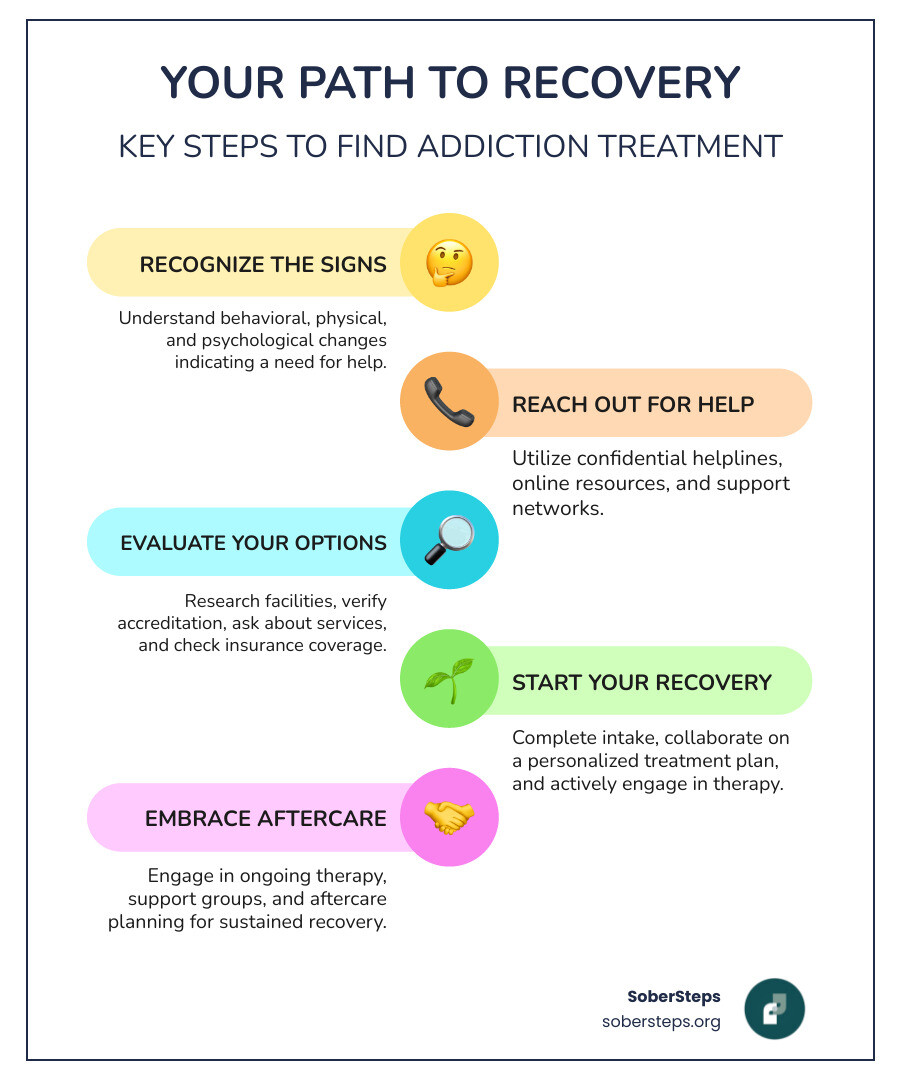
Deciding to find addiction treatment is a courageous choice, but the process of finding the right help can feel overwhelming. This guide provides clear, actionable steps and resources to simplify your search, making your journey to recovery a little easier.

Utilizing Helplines and Online Resources
One of the fastest and most confidential ways to start your search is by reaching out to helplines and using trusted online resources.
- SoberSteps Confidential Helpline: We understand that privacy is paramount when you’re looking for help. Our confidential helpline at (844) 491-5566 offers 24/7 support. When you call, you’ll speak with a compassionate professional who can provide guidance, answer your questions, and connect you with appropriate resources and treatment options custom to your needs. This service is designed to be completely anonymous, ensuring your peace of mind.
- SoberSteps Online Resources: Our platform at sobersteps.org is built on the principle of confidentiality and anonymity. You can explore treatment options, learn about different types of care, and gather information without fear of judgment. Our goal is to empower you with knowledge and make the initial steps of finding help as smooth as possible.
- National Helplines: Several national resources provide free and confidential support:
- 988 Suicide & Crisis Lifeline: For immediate crisis support related to mental health or substance use, call or text 988. This service is available 24/7.
- SAMHSA’s National Helpline: The Substance Abuse and Mental Health Services Administration (SAMHSA) offers a National Helpline at 1-800-662-HELP (4357). This helpline provides confidential treatment referral and information, 24/7, in English and Spanish.
- Disaster Distress Helpline: If you’re experiencing emotional distress related to a natural or human-caused disaster, you can call 1-800-985-5990 for immediate crisis counseling, 24/7.
- Online Treatment Locators:
- FindTreatment.gov: This official U.S. government website is authorized by the 21st Century Cures Act. It’s a confidential and anonymous resource for finding treatment facilities for mental and substance use disorders across the United States. Its information is updated annually from facility responses to SAMHSA’s National Substance Use and Mental Health Services Survey (N-SUMHSS), ensuring current data. You can learn more about the data source. They also offer instructional videos on how to use the site effectively, such as the FindTreatment.gov Overview and how to View in a Map for local options.
How to Find Addiction Treatment for Specific Needs
Once you have access to these powerful search tools, you can refine your search to find addiction treatment that truly meets your individual circumstances.
- Filtering Search Results: Most online locators, including FindTreatment.gov, allow you to filter results by:
- Location: Enter your zip code, city, or state to find facilities nearby.
- Type of Care: Specify if you’re looking for residential, outpatient, detox, or other levels of care.
- Payment Options: Filter by facilities that accept your insurance (e.g., Medicare, Medicaid, private insurance) or offer sliding scale fees or payment assistance programs.
- Special Programs/Groups: This is crucial for custom care. You can often find filters for:
- Veterans: Resources like the Veterans Crisis Line are dedicated to supporting those who have served. Many facilities offer specialized programs for veterans, recognizing their unique experiences.
- Individuals with Co-occurring Disorders: Given that about half of people with a substance use disorder also experience serious mental illness, finding a facility that treats both simultaneously (integrated treatment) is vital.
- Other Specific Populations: This can include young adults, seniors, pregnant women, individuals with HIV/AIDS, trauma survivors, or those involved in the criminal justice system.
- California-Specific Resources: For residents in California, there are additional dedicated resources. L.A. Care members, for instance, can have an assessment to match them to services. We encourage you to visit the L.A. County Public Health Department’s Substance Abuse Prevention and Control (SAPC) website or call 1-800-854-7771 for more information on local treatment options. Additionally, the California Department of Health Care Services (DHCS) website provides a list of all counties’ telephone numbers for substance use disorder services.
- How SoberSteps Can Help: Our platform is designed to help you steer these filters and connect you with custom options that align with your specific needs, making the search process less daunting. Call us at (844) 491-5566 for personalized assistance.
Vetting a Facility: Questions to Ask
Once you have a list of potential treatment facilities, it’s important to ask the right questions to ensure you choose a high-quality program.
- Accreditation and Licensing: Is the facility licensed by the state? Is it accredited by national organizations like The Joint Commission or CARF? These accreditations indicate that the facility meets rigorous standards of care.
- Staff Qualifications: Are the clinical staff (doctors, therapists, counselors) licensed and certified in their respective fields? What is their experience in treating addiction?
- Evidence-Based Practices: Does the facility use treatments proven to be effective through scientific research, such as Cognitive Behavioral Therapy (CBT), Dialectical Behavior Therapy (DBT), or Motivational Interviewing?
- Success Rates: While difficult to quantify precisely, ask about their approach to measuring outcomes and what their long-term recovery support looks like.
- Individualized Treatment Plans: Does the facility create personalized treatment plans based on a thorough assessment of your unique needs, history, and goals? A good program will not use a one-size-fits-all approach.
- Aftercare Planning: What kind of support does the facility offer for after treatment? This might include continued therapy, support groups, sober living referrals, or alumni programs. A strong aftercare plan is crucial for sustained recovery.
Navigating Your Path to Recovery
You’ve done the hard work of researching and vetting options; now it’s time to prepare for and begin treatment. This section covers what to expect and how to handle the practical aspects of starting your journey.
What to Expect When Starting Treatment
The first few days or weeks of treatment can be intense, but knowing what to expect can ease the transition.
- Initial Assessment: Before treatment begins, you’ll undergo a comprehensive assessment. This involves interviews, medical evaluations, and psychological screenings to understand your substance use history, mental health, physical health, and any co-occurring disorders. This information is vital for creating a personalized treatment plan.
- Intake Process: This involves completing paperwork, reviewing program rules and expectations, and getting oriented to the facility. It’s a time to ask any final questions and settle in.
- Creating a Treatment Plan: Based on your assessment, you’ll work with your treatment team to develop a personalized plan. This plan will outline your goals, the types of therapies you’ll receive, and the skills you’ll work on. It’s a collaborative process, and your input is essential.
- A Typical Day in Rehab: While schedules vary, a typical day in residential treatment is highly structured. It often includes individual therapy, group counseling, educational workshops on addiction and coping skills, recreational activities, and time for reflection. The structure provides stability and helps establish healthy routines.
- The Importance of Participation: Your active engagement is the most significant factor in the success of your treatment. Be open, honest, and willing to participate fully in all aspects of the program. Recovery is a journey that requires effort and commitment.
How to Find Addiction Treatment You Can Afford
Concern about cost is a common barrier when people try to find addiction treatment. However, many options exist to make treatment accessible and affordable.
- Insurance Coverage: Thanks to the Affordable Care Act (ACA) and mental health parity laws, most health insurance plans are required to cover mental health and substance use disorder services. Many plans may cover up to 100% of the cost of treatment. It’s crucial to contact your insurance provider directly to understand your specific benefits, deductibles, and co-pays. Our team can also help you verify your insurance coverage. Call us at (844) 491-5566 for assistance.
- Medicaid: This federal-state program provides health coverage for low-income adults, children, pregnant women, elderly adults, and people with disabilities. Many addiction treatment services are covered under Medicaid. For example, Medi-Cal members in California can receive substance use disorder services through their county.
- Medicare: This federal health insurance program for people aged 65 or older, and certain younger people with disabilities, also covers various addiction treatment services, including inpatient, outpatient, and partial hospitalization programs.
- State-Financed Health Insurance: Beyond Medicaid, many states have their own programs to assist residents with treatment costs. For instance, New York’s OASAS agency is working to make services more accessible, effective, and compassionate, often through state funding. County Behavioral Health Plans frequently provide specialty substance use services.
- Sliding Scale Fees: Many facilities offer a sliding fee scale, where the cost of treatment is adjusted based on your income and ability to pay.
- Payment Assistance Programs and Grants: Look for facilities that offer payment plans, scholarships, or connect you with grant funding. Some states and non-profit organizations offer financial assistance specifically for addiction treatment. New York, for example, has an Addiction Professionals Scholarship Program that supports individuals working in the field, indirectly contributing to more accessible care.
We can assist you in navigating these financial options to find addiction treatment that fits your budget. Call our helpline at (844) 491-5566 to discuss your options.
Supporting a Loved One and Overcoming Stigma
If you’re seeking to find addiction treatment for a loved one, your support is invaluable. It’s also essential to address the pervasive stigma surrounding addiction.
- How to Offer Support: Start by educating yourself about substance use disorder. Offer non-judgmental support, express your concern, and be willing to help them find resources. Remember to set healthy boundaries for yourself.
- Communication Strategies: Open and honest communication is key. Use “I” statements to express your feelings without blame. Avoid lecturing, shaming, or enabling. Encourage them to seek professional help and offer to assist in the search.
- The Role of Family in Recovery: Family involvement, often through family therapy, can be incredibly beneficial. It helps repair relationships, addresses family dynamics that may contribute to substance use, and creates a supportive environment for long-term recovery. Support groups like Al-Anon or Nar-Anon are also vital resources for family members.
- Combating Stigma: Stigma is a significant barrier to seeking help. We must remember that addiction is a chronic disease, not a moral failing. It changes the brain and alters decision-making, just like other chronic health conditions.
- Addiction as a Medical Condition: Understanding addiction as a treatable medical condition helps to dismantle the judgment and shame often associated with it. New York’s OASAS and other health organizations are actively working on “Turn the Page on Stigma” campaigns to promote acceptance and understanding.
- Person-First Language: Using person-first language (e.g., “person with a substance use disorder” instead of “addict”) helps to humanize individuals and reduces the negative impact of labels. Our commitment to providing a confidential and anonymous platform at SoberSteps directly combats this stigma, creating a safe space for individuals to explore their options.
Frequently Asked Questions about Finding Treatment
We know you might have many questions as you try to find addiction treatment. Here are some of the most common ones we hear:
How do I know if I or a loved one needs addiction treatment?
Recognizing the signs is the first step toward getting help. Key indicators that someone may need addiction treatment include:
- Loss of Control: Inability to limit substance use, despite intentions to do so.
- Neglecting Responsibilities: Failing to meet obligations at work, school, or home due to substance use.
- Relationship Problems: Continued substance use despite negative impacts on relationships with family and friends.
- Developing a Tolerance: Needing more of the substance to achieve the desired effect.
- Withdrawal Symptoms: Experiencing physical or psychological discomfort when not using the substance.
- Continued Use Despite Harm: Using substances even when aware of the physical or psychological problems it’s causing.
- Craving: Intense urges to use the substance.
- Secretiveness or Dishonesty: Hiding substance use from others.
If substance use is negatively impacting your life or the life of a loved one in any of these ways, it’s time to seek professional help. Early intervention can make a significant difference.
What is the difference between inpatient and outpatient treatment?
The primary difference lies in the living situation and intensity of care:
- Inpatient Treatment (Residential Treatment): Requires you to live at the treatment facility 24/7. This provides a highly structured, immersive, and substance-free environment, removing you from daily triggers. It’s ideal for severe addictions, those who need medical supervision during detox, or individuals who lack a stable, supportive home environment.
- Outpatient Treatment (OP, IOP, PHP): Allows you to live at home or in a sober living facility while attending therapy sessions and appointments at the treatment center. This option offers more flexibility, enabling you to maintain work, school, or family commitments. It’s suitable for individuals with strong support systems, less severe addictions, or those transitioning from inpatient care. The intensity varies, from a few hours a week (OP) to several hours a day (PHP).
Both approaches aim to help individuals develop coping skills, address underlying issues, and build a foundation for lasting recovery. The best choice depends on individual needs and circumstances.
Are treatment searches confidential?
Yes, absolutely. We understand that confidentiality and privacy are paramount when seeking help for substance use or mental health disorders. Resources like the SoberSteps confidential helpline at (844) 491-5566 and our online tools are designed to be private and anonymous.
Similarly, official government resources like FindTreatment.gov explicitly state that they are a “Confidential and anonymous resource for persons seeking treatment for mental and substance use disorders.” Your privacy and anonymity are always a priority, ensuring you can explore your options without fear of judgment or exposure.
Your Journey to a Healthier Life Starts Now
Taking the step to find addiction treatment is a courageous act of self-care. Recovery is not just possible; it’s a reality for millions of Americans who have reclaimed their lives. With the right support system and a personalized treatment plan, you can too.
The resources and guidance in this article are here to empower you on that path. We at SoberSteps are committed to providing a confidential and anonymous way to explore your options and connect with the care you deserve. Don’t let fear or uncertainty hold you back from a healthier, happier future.
Take the first step toward recovery or call our 24/7 confidential helpline at (844) 491-5566