

Understanding the Journey Through Stimulant Addiction Recovery
Stimulant addiction recovery is a comprehensive process combining evidence-based behavioral therapies, medical support, and lifestyle changes to help individuals overcome dependence on drugs like cocaine, methamphetamine, and prescription stimulants. Core elements usually include structured behavioral therapies such as Cognitive Behavioral Therapy (CBT), medical supervision during withdrawal, and strong recovery support systems.
The need for effective treatment is urgent. Between 2012 and 2021, overdose deaths involving methamphetamine increased more than twelve-fold, and today about half of all overdose deaths in the United States involve stimulants. Despite these alarming trends, treatment dropout rates often exceed 50%, highlighting the critical need for accessible, effective care and ongoing support.
Stimulants, including illicit drugs like cocaine and methamphetamine and prescription medications like Adderall, work by flooding the brain with dopamine, creating a powerful sense of euphoria and energy. This intense high can quickly lead to tolerance, dependence, and addiction that is difficult to break without professional help.
At Sober Steps, we provide comprehensive resources and confidential support to guide you through every stage of stimulant addiction recovery. Our platform connects you with evidence-based treatment options, including therapy programs and information on detox and levels of care, so you can make informed decisions about next steps.
If you or a loved one is struggling, you do not have to steer this alone. Visit our page on stimulant treatment options or use our 24/7 confidential helpline to get immediate guidance.
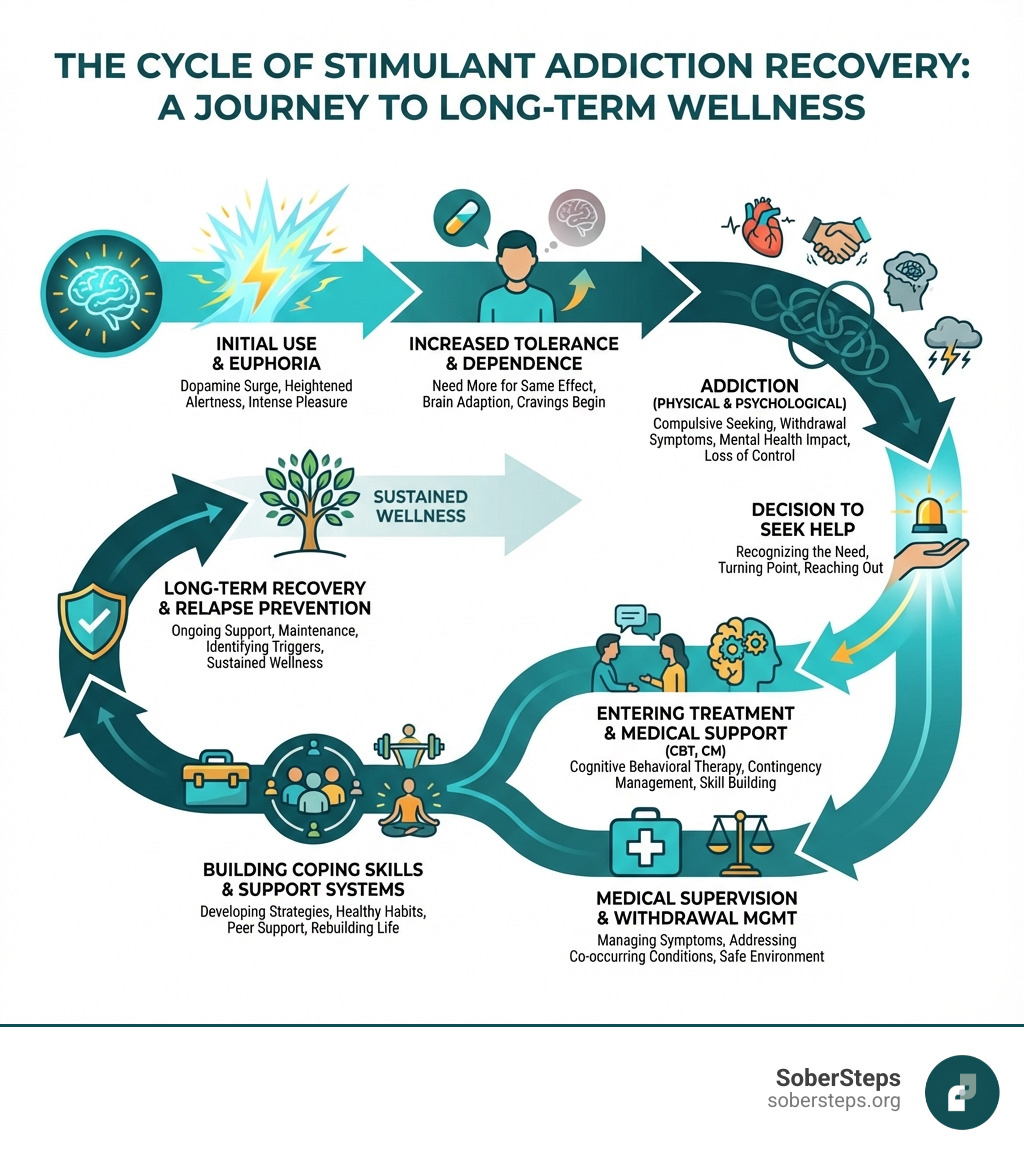
The Impact and Signs of Stimulant Addiction
Stimulants profoundly affect both brain and body, changing short-term highs into long-term health crises. Understanding these impacts and recognizing addiction signs is crucial for seeking timely help and starting stimulant addiction recovery.
If you recognize these effects in yourself or someone close, explore treatment options or reach out through our confidential helpline.

Short-Term Effects: The Deceptive Allure
Initially, stimulants deliver euphoria, heightened alertness, increased concentration, and energy surges. They suppress appetite and lift heart rate, blood pressure, and breathing. This temporary boost masks significant internal strain and sets the stage for dependency.
Long-Term Effects: The Hidden Toll
Chronic use causes severe cardiovascular damage, including irregular heartbeat, heart failure, seizures, and sudden death risk. The brain undergoes significant changes, with users experiencing paranoia, anxiety, confusion, and psychosis with hallucinations. Other effects include:
- Decreased sexual function and aggression
- Severe tooth decay (“meth mouth”)
- Skin sores from compulsive picking
- Significant weight loss and malnutrition
- Premature aging
Chronic use significantly increases suicide risk, often linked to profound depression accompanying prolonged use and withdrawal.
Common Signs and Symptoms
Behavioral Warning Signs:
- Intense energy periods followed by extreme fatigue
- Neglecting responsibilities
- Risky behaviors and secretiveness
- Financial problems from drug purchases
- Social withdrawal
- Continued use despite consequences
Physical Warning Signs:
- Appetite decrease and weight loss
- Dilated pupils, rapid heart rate
- Twitches, tremors, frequent nosebleeds
- Skin sores, poor hygiene
- Sleep disturbances
Psychological Warning Signs:
- Mood swings, irritability, aggression
- Persistent anxiety or depression
- Paranoia and suspiciousness
- Hallucinations and delusions
- Confusion or impaired memory
Recognizing these signs signals the need for help. Start exploring levels of care or learn about therapy approaches. Find confidential help today or reach out through our 24/7 helpline.
Comprehensive Treatment for Stimulant Addiction Recovery
Successfully navigating stimulant addiction recovery involves evidence-based therapies, medical support, and a supportive environment. A comprehensive, individualized treatment plan is essential given stimulants’ powerful grip on the brain.
Explore treatment programs or learn about therapy modalities.
The Foundation: Behavioral Therapies
Behavioral therapies are the most effective treatments for stimulant use disorder. Unlike opioid or alcohol disorders, no FDA-approved medications exist specifically for stimulant dependence, emphasizing psychosocial interventions.
-
Contingency Management (CM): The most effective treatment, providing tangible rewards for negative drug tests or counseling attendance. The ASAM/AAAP recognizes CM as the current standard of care.
-
Cognitive Behavioral Therapy (CBT): Helps identify and modify thought patterns contributing to use, teaching coping skills for cravings and triggers. Programs integrate CBT to empower individuals with lasting skills.
-
Motivational Interviewing (MI): Client-centered counseling helping individuals explore ambivalence about change, finding their own recovery motivations.
-
Community Reinforcement Approach (CRA): Comprehensive intervention making sober lifestyle more rewarding than drug use through vocational counseling, social skills training, and family therapy.
Despite proven efficacy, dropout rates exceed 50%, underscoring the need for engaging treatment environments. Explore addiction therapy options or contact our 24/7 helpline.
The Role of Medication
No FDA-approved medications exist specifically for stimulant use disorder. However, the FDA’s evolving approach recognizes “use reduction” as valid, supporting new treatment development.
Promising Research:
- Bupropion and naltrexone combinations show promise
- Topiramate, mirtazapine, and modafinil under investigation
- Long-acting psychostimulants for co-occurring ADHD
Novel Targets in Development:
- Kappa-opioid and sigma-1 receptors
- GABA transmission improvement
- Psilocybin-assisted psychotherapy
- Monoclonal antibodies and vaccines
For details on cutting-edge research, see Scientific research on novel therapeutics.
Discuss medication options with qualified clinicians through our treatment directory or call our helpline.
Managing Withdrawal
Withdrawal management (“detox”) is the critical first step where the body rids itself of stimulants while managing challenging symptoms.
Common Withdrawal Symptoms:
- Profound depression with suicide risk
- Intense cravings
- Fatigue, anxiety, mood swings
- Insomnia followed by hypersomnia
- Paranoia, confusion, headaches
- Increased hunger
Medically supervised detox provides a structured setting for safely navigating symptoms. While no specific medications “cure” withdrawal, certain medications manage severe symptoms.
Detox serves as the first step for stabilization before comprehensive behavioral therapies. Learn about detox and treatment options or contact our 24/7 helpline for program identification.
Choosing the Right Treatment Setting
Deciding where to begin stimulant addiction recovery depends on addiction severity, co-occurring disorders, and existing support systems.
Compare treatment options or get personalized guidance through our confidential helpline.

Inpatient vs. Outpatient Programs
| Feature | Inpatient Treatment | Outpatient Treatment |
|---|---|---|
| Structure | 24/7 supervised residential care | Live at home, scheduled sessions |
| Intensity | High-intensity, immersive treatment | Lower intensity, few times weekly |
| Best For | Severe addiction, co-occurring disorders, unstable environment | Milder addiction, strong home support |
| Services | Medical detox, individual/group therapy, family counseling, aftercare | Individual/group therapy, relapse prevention, community referrals |
PHP and IOP offer middle ground – PHP involves most-day treatment several days weekly; IOP involves multiple weekly sessions with flexibility.
Explore treatment program types or contact our 24/7 helpline for matching your needs with appropriate programs.
Building Long-Term Recovery
Stimulant addiction recovery extends beyond initial treatment, requiring strong support systems and healthy coping mechanisms.
For post-treatment support, explore therapy, group counseling, and dual diagnosis care.
Building Support Systems
- Support Groups: CA, CMA, or SMART Recovery provide community and shared experience
- Family Therapy: Heals relationships and creates supportive home environments
- Sober Networks: Replace triggering environments with positive connections
Programs incorporate Group Therapy to build essential connections.
Holistic Approaches
- Dual Diagnosis Treatment: Treating co-occurring mental health conditions simultaneously. Find Dual Diagnosis and Co-occurring Disorders Treatment
- Mental Health Counseling: Addresses root causes and develops coping strategies
- Healthy Lifestyle: Exercise, balanced diet, mindfulness practices
- Life Challenges: Case management for housing, employment, legal issues
Find integrated care through our treatment options or contact our 24/7 helpline for support.
Frequently Asked Questions
Navigating stimulant addiction recovery brings many questions. Here are common inquiries with guidance.
For additional questions, reach out through our helpline or review treatment options and therapy approaches.
How long does stimulant withdrawal last?
Acute withdrawal lasts 1-2 weeks, but psychological symptoms like depression and cravings can persist for months. Duration depends on stimulant type, use length, and individual health. Medically supervised detox is recommended – arrange through treatment options.
Are there medications to help?
No FDA-approved medications exist specifically for stimulant use disorder. Some medications may be used off-label for symptoms or co-occurring conditions. Promising research is underway. Find programs with medical support through dual diagnosis services or contact our helpline.
What is the most effective treatment?
Behavioral therapies combining Contingency Management and CBT are most effective, especially in structured programs. Learn about therapy for addiction or compare treatment options. Our 24/7 helpline connects you with matching providers.
Conclusion: Your Path to a Stimulant-Free Life
Starting on the journey of stimulant addiction recovery is a courageous step toward a new life. Throughout this guide, we have explored how stimulants affect the brain and body, the warning signs of addiction, and the comprehensive, evidence-based treatments available. From foundational behavioral therapies like Contingency Management and Cognitive Behavioral Therapy to the critical role of medically supervised withdrawal and the importance of a supportive environment, every component plays a vital role in healing.
The path to recovery can be challenging, marked by cravings, psychological distress, and the hard work of rebuilding a life. Yet stimulant addiction is treatable, and with the right help, a life free from the grip of these substances is achievable.
At SoberSteps, we are dedicated to providing you with clear information and connections to care. You can:
- Explore different treatment options and levels of care
- Learn about therapy approaches and group counseling
- Understand how dual diagnosis treatment can address both addiction and mental health conditions
Do not let addiction define your future. If you are ready to explore help for yourself or someone you love, take the next step today. Visit our treatment options page to compare programs, or use our 24/7 confidential helpline to be connected with treatment providers who can guide you on your recovery journey.
Your path to stimulant addiction recovery can start right now with a single, informed decision.
Building a Life in Long-Term Recovery
Stimulant addiction recovery is not just about stopping drug use; it’s about building a fulfilling, stimulant-free life. This ongoing journey requires developing robust coping mechanisms, fostering strong support systems, and addressing underlying life challenges to prevent relapse.
Building a Support System for Long-Term Stimulant Addiction Recovery
A strong support system is one of the most crucial elements for sustained stimulant addiction recovery. It provides encouragement, accountability, and a sense of belonging, combating the isolation that often accompanies addiction.
-
Role of Support Groups: Mutual-help groups offer a powerful platform for shared experiences and peer support.
- 12-Step Programs: Groups like Cocaine Anonymous (CA) or Crystal Meth Anonymous (CMA) provide a structured program for recovery, emphasizing spiritual principles and peer mentorship. These groups offer a sense of community and understanding from others who have faced similar struggles.
- SMART Recovery: For those who prefer an alternative to the 12-step model, SMART Recovery (Self-Management And Recovery Training) offers science-based self-empowerment tools to support abstinence.
- Community Reinforcement: Beyond formal groups, the Community Reinforcement Approach (CRA) emphasizes rebuilding social networks to support a sober lifestyle. This involves connecting with individuals and engaging in activities that reinforce healthy choices and provide positive, drug-free social interactions. Our programs often incorporate Group Therapy to foster these vital connections.
-
Family Therapy and Counseling: Addiction affects the entire family system. Family therapy helps to heal relationships, improve communication, and educate family members on how to best support their loved one’s recovery while also caring for themselves. This can be particularly important in creating a supportive home environment.
-
The Importance of Sober Social Networks: Replacing drug-using friends and environments with new, sober connections is vital. This shift can reduce triggers and provide positive influences, making it easier to maintain abstinence.
Holistic Approaches and Mental Health
Effective stimulant addiction recovery recognizes that individuals are complex beings with interconnected physical, mental, and emotional needs. Addressing these holistically is key to sustainable sobriety.
-
Addressing Co-occurring Mental Health Disorders: It’s very common for individuals with stimulant use disorder to also struggle with co-occurring mental health conditions such as depression, anxiety, trauma (PTSD), or ADHD. These “dual diagnoses” can complicate recovery if not treated simultaneously. Our approach emphasizes integrated treatment, where both the addiction and mental health conditions are addressed concurrently. Our specialized programs offer Dual Diagnosis and Co-occurring Disorders Treatment to provide comprehensive care.
-
The Role of Mental Health Counseling: Mental health counseling provides a safe space to explore the underlying emotional issues, past traumas, and psychological factors that may contribute to stimulant use. Individual therapy helps individuals develop self-awareness, emotional regulation skills, and healthier coping strategies. Counseling also plays a crucial role in managing the prolonged psychological symptoms of withdrawal, such as depression and anxiety, which can persist for months after acute detox.
-
Holistic Strategies: Beyond traditional therapy, incorporating holistic practices can significantly improve well-being in recovery:
- Exercise: Regular physical activity can reduce stress, improve mood, combat fatigue, and promote overall physical health. It’s a powerful tool for managing cravings and improving mental health.
- Nutrition: Stimulant use often leads to malnutrition and appetite suppression. Focusing on balanced nutrition helps restore physical health, energy levels, and cognitive function, which are essential for recovery.
- Mindfulness and Meditation: These practices teach individuals to stay present, manage stress, and develop a greater sense of calm and self-control, particularly in the face of cravings or emotional distress.
-
Addressing Life Challenges: Recovery is often intertwined with practical life circumstances. Addressing challenges such as unstable housing, unemployment, legal issues, or relationship conflicts can significantly reduce stress and the likelihood of relapse. Case management services often help individuals steer these areas, connecting them with resources for housing, employment support, and legal aid.
By combining these elements, individuals can build a strong foundation for long-term stimulant addiction recovery, creating a life that is not only free from drugs but also rich in purpose and well-being. If you are seeking integrated care for addiction and mental health, Find a treatment center that offers dual diagnosis care.
Frequently Asked Questions about Stimulant Recovery
We understand that navigating the path to stimulant addiction recovery can bring up many questions. Here, we address some of the most common inquiries to provide clarity and guidance.
How long does stimulant withdrawal last?
The acute phase of stimulant withdrawal, characterized by intense physical and psychological discomfort, typically lasts about one to two weeks. However, psychological symptoms such as profound depression, anxiety, extreme fatigue, and intense cravings can persist for weeks or even months. This prolonged period of psychological symptoms is often referred to as post-acute withdrawal syndrome (PAWS) and can be a significant challenge in early recovery. The exact timeline and severity of withdrawal vary based on several factors, including the specific stimulant used (e.g., cocaine vs. methamphetamine), the duration and intensity of use, individual physiology, and the presence of co-occurring mental health conditions. Medically supervised detox can help manage these symptoms safely.
Are there medications to help with stimulant addiction?
Currently, there are no FDA-approved medications specifically designed to treat stimulant use disorder. This is a critical distinction from opioid or alcohol addiction, for which several medications are available. However, some medications may be used off-label by medical specialists to manage severe withdrawal symptoms (like antidepressants for depression or sedatives for extreme anxiety/insomnia during detox) or to treat co-occurring mental health conditions. Research into new pharmacological treatments is actively ongoing, with promising candidates like bupropion and naltrexone combinations for methamphetamine, and various novel compounds targeting brain receptors. The FDA is also evolving its approach to recognizing “use reduction” as a valid treatment outcome, which may encourage further medication development.
What is the most effective treatment for stimulant addiction?
Research consistently shows that behavioral therapies are the most effective treatments for stimulant addiction recovery. A combination of Contingency Management (CM) and Cognitive Behavioral Therapy (CBT) is often considered the gold standard. CM provides tangible rewards for drug-negative urine samples and treatment engagement, while CBT equips individuals with coping skills to manage cravings and triggers. When these behavioral therapies are delivered in a structured setting, such as an inpatient program, they tend to yield the highest chances of successful recovery, especially for individuals with severe addiction or co-occurring mental health issues. A comprehensive approach that includes a strong support system, mental health counseling, and addressing life challenges further improves long-term success.
Conclusion: Your Path to a Stimulant-Free Life
Starting on the journey of stimulant addiction recovery is a profound step toward reclaiming your life. We’ve explored the devastating impact stimulants can have on the brain and body, the tell-tale signs of addiction, and the comprehensive, evidence-based treatments available. From the foundational behavioral therapies like Contingency Management and Cognitive Behavioral Therapy to the critical role of medically supervised withdrawal and the importance of a supportive environment, every component plays a vital role in healing.
We know that the path to recovery can be challenging, marked by intense cravings, psychological distress, and the hard work of rebuilding a life. However, we want to reassure you that hope is not lost. Stimulant addiction is treatable, and a life free from the grip of these powerful substances is not just a dream—it’s an achievable reality.
At SoberSteps, we are dedicated to providing you with the resources and guidance needed to steer this journey. Our platform offers valuable information on treatment options, helps you understand different levels of care, and connects you with reputable treatment providers. We believe in the power of professional help, custom treatment plans, and unwavering support to achieve lasting sobriety.
Don’t let the “buzz” of addiction control your future. Take the first courageous step toward a healthier, happier life. Take the first step today and call our 24/7 helpline. Your journey to stimulant addiction recovery starts now.