

Why Finding the Right Support Matters
Reaching out for help with alcohol use can feel overwhelming, but you do not have to figure it out alone. Rehab centers for alcohol abuse provide structured, professional treatment for individuals struggling with Alcohol Use Disorder (AUD). These facilities offer a path to recovery through services like medical detox, therapy, and aftercare planning. Treatment options are custom to your needs, ranging from 24/7 inpatient programs to flexible outpatient care that allows you to live at home.
Key types of alcohol rehab centers:
- Inpatient/Residential Rehab: Live-in treatment for 30-90+ days with round-the-clock medical and emotional support.
- Outpatient Programs: Attend therapy sessions while living at home, with varying levels of intensity.
- Medical Detox Centers: Medically supervised withdrawal management, typically lasting 3-7 days.
- Dual Diagnosis Centers: Treat both alcohol addiction and co-occurring mental health conditions like depression or anxiety.
Alcohol-related problems are a significant public health issue in the United States, but recovery is possible. Research shows that most people with AUD benefit from treatment, and professional rehab significantly increases the chances of long-term sobriety.
Whether you’re seeking help for yourself or a loved one, understanding your options is the first step. At SoberSteps, we’ve guided thousands toward quality alcohol addiction treatment. Our comprehensive rehab center directory and expert resources help you steer your choices with confidence.
For a deeper look at how we work with individuals and families, see Why choose SoberSteps?, or explore our full library of treatment and recovery resources.
Ready to take the first step? Contact SoberSteps for confidential help or learn more about how SoberSteps supports your recovery journey.
If you are exploring additional options, you can also review:
Call to Action: Still comparing choices? Visit our treatment options hub or get a confidential assessment now.
Understanding Alcohol Addiction: Recognizing the Need for Help

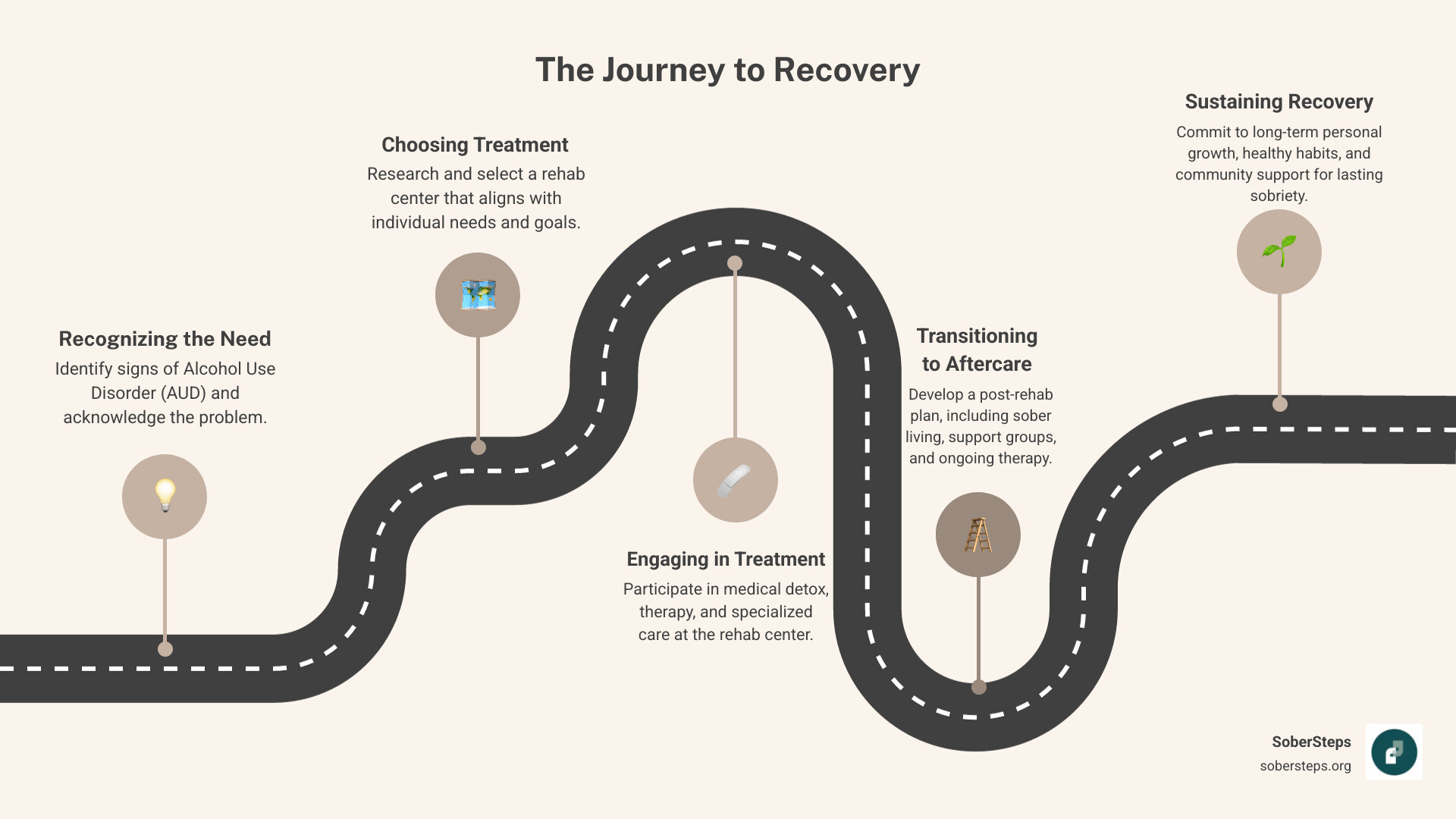
Recognizing that alcohol has become a problem is the most crucial first step toward recovery. Alcohol addiction, or Alcohol Use Disorder (AUD), is a disease characterized by a physical and psychological dependence on alcohol. This means your body and mind adapt to its presence, leading to dangerous withdrawal symptoms if you stop. Admitting you or a loved one needs help is difficult, but it’s the gateway to a life free from alcohol’s grip. With support from rehab centers for alcohol abuse, recovery is a tangible reality.
To better understand what the first days of change look like, read The First Step is the Hardest: How to Begin Addiction Recovery.
Call to Action: Unsure if you need help? Take our self-assessment or reach out to our team. You can also learn more about how SoberSteps supports your recovery.
Signs and Symptoms of Alcohol Addiction
Alcohol Use Disorder (AUD) is diagnosed based on specific symptoms. If these signs seem familiar, professional help from rehab centers for alcohol abuse could be beneficial:
- Cravings: An intense urge to drink.
- Loss of Control: Drinking more or longer than intended.
- Increased Tolerance: Needing more alcohol to get the same effect.
- Withdrawal Symptoms: Experiencing physical or psychological discomfort (nausea, tremors, anxiety) when you stop drinking.
- Neglecting Responsibilities: Alcohol use interfering with your job, school, or home life.
- Relationship Problems: Continuing to drink despite it causing issues with family and friends.
- Continued Use Despite Harm: Drinking even when it worsens physical or mental health problems.
More on Alcohol Withdrawal Symptoms
To understand how these warning signs typically show up, visit Learn about the warning signs of addiction.
Call to Action: If these symptoms resonate with you, speak with a SoberSteps specialist or explore treatment options near you.
The Effects of Long-Term Alcohol Abuse on Body and Mind
Chronic alcohol abuse takes a heavy toll on your physical and mental health, but many effects can be reversed with sobriety. Long-term AUD can lead to:
- Liver Damage: Ranging from fatty liver to life-threatening cirrhosis.
- Heart Problems: High blood pressure, enlarged heart, and increased risk of stroke.
- Brain Damage: Alcohol is a neurotoxin that can cause brain shrinkage, memory loss, and cognitive decline.
- Weakened Immune System: Making you more susceptible to infections.
- Mental Health Decline: Worsening or triggering conditions like depression and anxiety.
Seeking help from rehab centers for alcohol abuse is an investment in your health.
For a deeper dive into the science behind these effects, see How alcohol affects your health.
Call to Action: Get a personalized treatment plan and learn which level of care fits your current health needs.
When Is It Time for Treatment?
Deciding to seek treatment is personal, but clear indicators can signal the need for professional help. Ask yourself:
- Have you tried to stop drinking but couldn’t?
- Are you drinking despite negative consequences in your life?
- Do you hide your drinking from others?
- Have friends or family expressed concern about your drinking?
- Do you rely on alcohol to cope with stress or emotions?
- Do you experience withdrawal symptoms when you don’t drink?
If you answered yes to several of these questions, it’s a strong sign that it’s time to explore treatment options. Chemical dependency is a disease that requires professional care.
For more guidance, read Is it time for rehab? and review our treatment options ultimate guide.
Call to Action: If you relate to these signs, explore your treatment options or use our rehab centers directory to start planning your next step.
Exploring Alcohol Addiction Treatment Programs

The journey to recovery is unique, and treatment programs for alcohol addiction are diverse. Finding the right fit is key, as treatment is not one-size-fits-all. Programs range from highly structured, 24/7 care to flexible options that fit around your daily responsibilities. We’re here to help you steer these choices and find a path to lasting sobriety.
To understand the broader landscape of treatment, you can review our Drug Treatment Programs: Complete Guide.
Compare different treatment programs to find what works best for your situation.
Call to Action: Not sure where to begin? Find your ideal program with SoberSteps or browse our rehab centers directory.
Inpatient vs. Outpatient Alcohol Rehab
One of the first choices is between inpatient and outpatient programs. Both are effective but serve different needs.
| Feature | Inpatient Rehab (Residential) | Outpatient Rehab (IOP, PHP) |
|---|---|---|
| Environment | Live at the facility 24/7 in a structured, trigger-free setting. | Live at home and travel to a facility for scheduled therapy. |
| Intensity | Round-the-clock care and intensive therapy. Ideal for severe AUD. | Varies from intensive (several hours, multiple days/week) to standard (weekly). |
| Cost | Generally higher due to lodging and 24/7 support. | Generally lower as it does not include lodging. |
| Ideal Candidate | Those with severe AUD, co-occurring disorders, or an unstable home environment. | Those with mild-to-moderate AUD, a supportive home, and daily responsibilities. |
Inpatient rehab provides an immersive environment that significantly increases the likelihood of long-term sobriety. Outpatient programs offer flexibility while still providing robust therapeutic support.
For more help deciding between the two, see Is inpatient or outpatient right for you?.
Call to Action: Discuss your options with our team or take the next step and get a confidential assessment.
The Different Levels of Care
Treatment is categorized into different “levels of care” to match the intensity of support with individual needs.
- Medical Detox: The first step for many, providing medically supervised withdrawal management (3-7 days) to ensure safety.
- Residential/Inpatient Treatment: Living at a facility for 30-90+ days with 24/7 therapeutic and medical support.
- Partial Hospitalization (PHP): Intensive day treatment where patients return home in the evenings.
- Intensive Outpatient (IOP): Several hours of therapy multiple days a week, allowing patients to work or attend school.
- Standard Outpatient: The least intensive level, often involving weekly therapy sessions, ideal for aftercare or mild AUD.
Our team can help you determine the most appropriate level for your journey.
To explore how these levels apply specifically to you, visit What level of care do I need?.
Call to Action: Find the right level of care for your needs and connect with rehab centers that match that level of care.
How Long Does Alcohol Rehab Typically Last?
The duration of alcohol rehab is individualized. While 30-day programs are common, longer stays often lead to better outcomes. Common durations include:
- 30-Day Programs: An intensive start to detox and therapy.
- 60-Day Programs: More time to build coping skills and address underlying issues.
- 90+ Day Programs: Research from the National Institute on Drug Abuse (NIDA) shows that 90 days or more of treatment significantly increases the likelihood of long-term sobriety.
The right length depends on your clinical needs, the severity of addiction, and personal progress.
You can learn more about how clinicians think about timelines in How long should you stay in rehab? and our overview of research on treatment duration.
Call to Action: Get a custom treatment timeline and pair it with an appropriate program using our rehab center search tool.
What to Expect at Rehab Centers for Alcohol Abuse
Entering a rehab center for alcohol abuse can feel daunting, but the goal is to provide a safe, structured environment where you can focus entirely on recovery. A typical day balances individual therapy, group activities, and educational sessions to help you learn about addiction, develop coping skills, and connect with peers.
You can explore an overview of different program structures in our Treatment Options: Ultimate Guide.
Call to Action: Curious what daily life in treatment looks like? See what a day in rehab looks like and learn what to expect at SoberSteps rehab centers.
The Critical Role of Medical Detox in Treatment
For many, medical detoxification is the first and most critical step. Alcohol withdrawal can be dangerous and even life-threatening. Medical detox at rehab centers for alcohol abuse provides 24/7 medical supervision to manage withdrawal symptoms safely and comfortably. Medical staff monitor vital signs and may administer medications to prevent serious complications like seizures. This process, typically lasting 3-7 days, provides a safe bridge from active addiction to the therapeutic work of rehab.
Understanding Alcohol Withdrawal
To see why supervised detox is recommended over quitting on your own, read Why medical detox matters.
Call to Action: If you are worried about withdrawal, start safe detox with SoberSteps or explore detox-capable programs in our rehab centers directory.
Core Services Offered at an Alcohol Rehab Center
Reputable rehab centers for alcohol abuse offer a comprehensive array of services to address the root causes of addiction:
- Individual Therapy: One-on-one sessions using approaches like Cognitive-Behavioral Therapy (CBT) to change negative thought patterns.
- Group Counseling: Sharing experiences with peers to reduce isolation and build a sense of community.
- Family Therapy: Mending relationships and educating loved ones on how to support the recovery process.
- Medication-Assisted Treatment (MAT): Using FDA-approved medications like Naltrexone or Acamprosate to reduce cravings and support abstinence.
- Holistic Therapies: Integrating yoga, meditation, and art therapy to promote overall well-being.
- Nutritional Guidance: Learning healthy eating habits to support physical recovery.
You can compare different therapeutic approaches in more depth at Explore our therapy options.
Call to Action: Want to see which services are available through our partners? See all services at SoberSteps and match them with programs using our treatment finder.
Treating Co-Occurring Mental Health Disorders
Addiction rarely occurs in isolation. Many individuals also struggle with mental health disorders like anxiety, depression, or PTSD. This is known as a dual diagnosis. For recovery to be effective and lasting, it is crucial that both the alcohol use disorder and any co-occurring mental health conditions are treated simultaneously. Reputable rehab centers for alcohol abuse are equipped to provide this integrated treatment, which leads to much better long-term outcomes.
For more insight into how mental health and substance use interact, visit Mental health and addiction.
Call to Action: If you suspect a dual diagnosis, get help for co-occurring disorders and ask about integrated treatment options when you contact our team.
How to Prepare for Inpatient Alcohol Rehab
A little planning can ease the transition to inpatient rehab. Here’s how to prepare:
- What to Pack: Bring comfortable clothing, alcohol-free toiletries, and essential medications. A list will be provided by the facility.
- Arrange Obligations: Take care of work and family responsibilities. Time off may be protected by FMLA.
- Set Personal Goals: Reflect on what you hope to achieve to stay motivated.
- Mental Preparation: Be ready to be honest and vulnerable in therapy. Recovery requires courage and a willingness to change.
- Communicate with the Facility: Call the center with any questions to help alleviate anxiety.
Your Search Ends Here: Discover Rehab & Addiction Centers Nearby
Before you go, review our Checklist: Preparing for rehab so you feel confident about your first day.
Call to Action: Ready to plan your admission? Get your personalized prep checklist and find an appropriate program in our rehab centers directory.
Navigating the Logistics of Finding and Paying for Rehab
Finding the right rehab center for alcohol abuse is a big step, but logistics like finding a facility and understanding payment can be complex. We are here to simplify this process, remove barriers, and ensure treatment is accessible so you can focus on your recovery.
Help is Here: Finding the Best Drug Treatment and Rehab Centers for You
To see how we walk you through these decisions, read How SoberSteps helps you access care.
Call to Action: Overwhelmed by choices? Let us help you find the right rehab center or start with a confidential assessment.
How to Find Reputable Rehab Centers for Alcohol Abuse
Choosing a reputable facility is paramount. Here’s what to look for:
- Credentials and Accreditation: Look for accreditation from organizations like The Joint Commission or CARF, which signifies high standards of quality and safety.
- Evidence-Based Practices: Ensure the center uses scientifically backed therapies like CBT, DBT, and Medication-Assisted Treatment (MAT).
- Staff Qualifications: Inquire about the licensing and experience of their medical and clinical staff.
- Reviews and Testimonials: Read reviews to gain insight into the patient experience.
- Continuum of Care: A good facility should offer multiple levels of care, from detox to outpatient services, or provide referrals.
Our confidential helpline can connect you with trusted providers that meet these high standards.
For more detailed guidance, see How to choose a rehab center.
Call to Action: Get a list of trusted centers custom to your needs, or talk with our team about what to ask when you call a program.
The Cost of Alcohol Rehab and Payment Options
The cost of rehab centers for alcohol abuse varies, but financial constraints should not be a barrier to getting help. There are many ways to cover the cost of treatment:
- Insurance: Many facilities accept major health insurance. We can help you verify your benefits to understand what your plan covers.
- Private Pay: Paying directly is an option, and many centers offer payment plans.
- Sliding Scale Fees: Some centers adjust the cost of treatment based on your income.
- State-Funded Programs: Government programs often provide low-cost or free treatment for those with limited financial resources.
- Financing: Some facilities partner with lenders to offer financing plans.
Don’t let perceived costs deter you. Our team is dedicated to helping you explore all available options.
For a deeper breakdown of typical expenses, check Understanding rehab costs and how financial assistance at SoberSteps may help you access care.
Call to Action: Verify your insurance now and explore affordable rehab options near you.
Life After Rehab: The Journey to Lasting Recovery
Completing a program at a rehab center for alcohol abuse is a huge achievement, but recovery is a lifelong journey. The period after rehab, known as aftercare, is critical for preventing relapse and building a strong foundation for a sober life. Returning to daily life presents new challenges, which is why a robust support system is essential for success.
Our goal is to help you build a fulfilling life free from alcohol by applying the tools learned in rehab and engaging with a supportive community.
For more on what comes next, see Life after rehab.
Call to Action: Keep your momentum going—connect with our recovery community and explore ongoing support options.
What Happens After Completing a Program (Aftercare)?
Before you leave treatment, your clinical team will help you create a personalized aftercare plan to manage your needs and reduce the risk of relapse. Common elements include:
- Sober Living Homes: Structured, substance-free housing that helps transition from inpatient rehab to independent living.
- Alumni Programs: Ongoing connection and support through events and mentorship with others who have completed the program.
- Continued Therapy: Regular individual or group therapy sessions to continue processing emotions and developing coping skills.
- Support Groups: Mutual-support groups are a cornerstone of long-term recovery. Popular options include:
- Alcoholics Anonymous (AA): A 12-step program focused on peer support. Find a meeting on the official AA website.
- SMART Recovery: A science-based program using CBT tools. Learn more at the SMART Recovery website.
- SoberSteps Online Groups: We offer virtual recovery meetings for accessible, flexible support.
Online Addiction Recovery Support Groups
Be sure to review our guide on Aftercare planning so you can leave treatment with a clear roadmap.
Call to Action: Start building your long-term support system today—get your aftercare plan and join the SoberSteps community.
How to Support a Loved One Who Needs Treatment
Supporting a loved one with an alcohol addiction is challenging. Your support can be a powerful catalyst for change, but it’s important to approach it effectively while protecting your own well-being.
- Communicate Effectively: Approach conversations with compassion, not judgment. Focus on specific behaviors and their impact.
- Avoid Enabling: Don’t make excuses or provide financial support that fuels the addiction. This inadvertently perpetuates the problem.
- Set Boundaries: Establish clear, healthy boundaries to protect yourself and encourage your loved one to seek help.
- Participate in Family Therapy: Family therapy is proven to increase the chances of long-term abstinence by improving communication and educating the family.
- Get Support for Yourself: You need support too. Groups like Al-Anon Family Groups offer a safe space for families to share experiences and learn coping strategies.
Make it clear that you support their recovery, even if you don’t support their addiction.
Learn more about specific steps you can take in Learn more about family support and Family involvement in recovery.
Call to Action: If someone you care about is struggling, get resources for families or speak with our team about treatment options.
Frequently Asked Questions about Alcohol Rehab
We know you have questions about rehab centers for alcohol abuse. Here are answers to some common concerns.
Can I lose my job for going to alcohol rehab?
In the U.S., you generally have legal protections. The Family and Medical Leave Act (FMLA) allows eligible employees to take up to 12 weeks of unpaid, job-protected leave for medical reasons, including substance abuse treatment. The Americans with Disabilities Act (ADA) may also protect individuals from discrimination. It’s important to understand your company’s policies and your rights. Treatment centers maintain strict confidentiality.
To learn more, review Your rights at work.
Call to Action: Worried about talking to your employer? Speak to our team about your rights before you start treatment.
What is the success rate of alcohol rehab?
“Success” in rehab is more than just abstinence; it includes improved health, relationships, and quality of life. While there’s no single success rate, research consistently shows that treatment is effective. Key factors for success include the length of treatment (90+ days is recommended), individual commitment, and strong aftercare. Relapse can be part of the process, but persistence is a strong predictor of long-term sobriety.
For a deeper dive into outcomes and what they mean, see Understanding rehab success rates.
Call to Action: Learn how we support long-term recovery in our approach to care or talk with a specialist about building a plan that fits you.
Can I have visitors or make phone calls during inpatient rehab?
Yes, but with specific rules. To maintain a focus on recovery, rehab centers for alcohol abuse structure communication with the outside world. Most facilities have designated visiting hours (often on weekends) and scheduled times for phone calls to approved family members. Personal phones may be restricted, especially early in treatment. All policies will be explained upon admission.
For more details on typical expectations, visit What to expect during inpatient rehab.
Call to Action: Have specific questions about family contact? Ask us about our visitation policy and start planning your stay with our rehab preparation checklist.
Your Path to a Sober Future Starts Here
The journey to recovery from alcohol addiction is one of the most courageous paths you can take. It’s a testament to your strength and your desire for a healthier, more fulfilling life. At SoberSteps, we believe that future is not just possible—it’s a future you deserve.
Taking the first step by reaching out for help is the most crucial decision you’ll make. You don’t have to face this alone. Help is available, and a brighter future, free from the grip of alcohol, is within your reach.
Our confidential helpline is available 24/7 to connect you with trusted treatment providers who can guide you every step of the way. You can explore options through our rehab centers directory and learn more about why SoberSteps is different.
For additional education and planning tools, visit See all our resources and our comprehensive treatment options guide.
Call to Action: Start your recovery journey with SoberSteps now.
Call to Action: Prefer to talk it through first? Contact us for a confidential assessment and let us help you find the right level of care and rehab center for your needs.