
Why Confidential Mental Health Support Matters
Confidential mental health support is professional help for your emotional and psychological well-being that protects your privacy. If you’re struggling right now, here’s what you need to know:
Quick Access to Confidential Help:
- Immediate Crisis Support: Call or text 988 (Suicide & Crisis Lifeline) or (844) 491-5566 for confidential guidance 24/7
- Professional Therapy: Licensed therapists, counselors, and social workers bound by HIPAA privacy laws
- Anonymous Resources: Crisis text lines, online chat services, and peer support groups
- Treatment Programs: Detox, inpatient, outpatient, and intensive programs with strict confidentiality protocols
- Specialized Support: Custom services for youth, veterans, Indigenous peoples, and 2SLGBTQIA+ individuals
In the United States, approximately 1 in 5 adults experience a mental illness. Yet many people avoid seeking help because they fear judgment, worry about professional consequences, or don’t know where to turn.
The truth is simple: your mental health matters as much as your physical health. And just like seeing a doctor for a broken bone, reaching out for mental health support is a sign of strength, not weakness.
Privacy is not just a courtesy in mental health care—it’s a legal right. Federal laws like HIPAA ensure that what you share with your therapist or counselor stays private. This confidentiality creates a safe space where you can be honest about your struggles without fear of exposure.
At Sober Steps, we’ve dedicated ourselves to connecting individuals with confidential mental health support and treatment resources in a judgment-free environment. We understand that taking the first step toward help requires courage, which is why we prioritize your privacy and provide compassionate guidance every step of the way—call us anytime at (844) 491-5566.
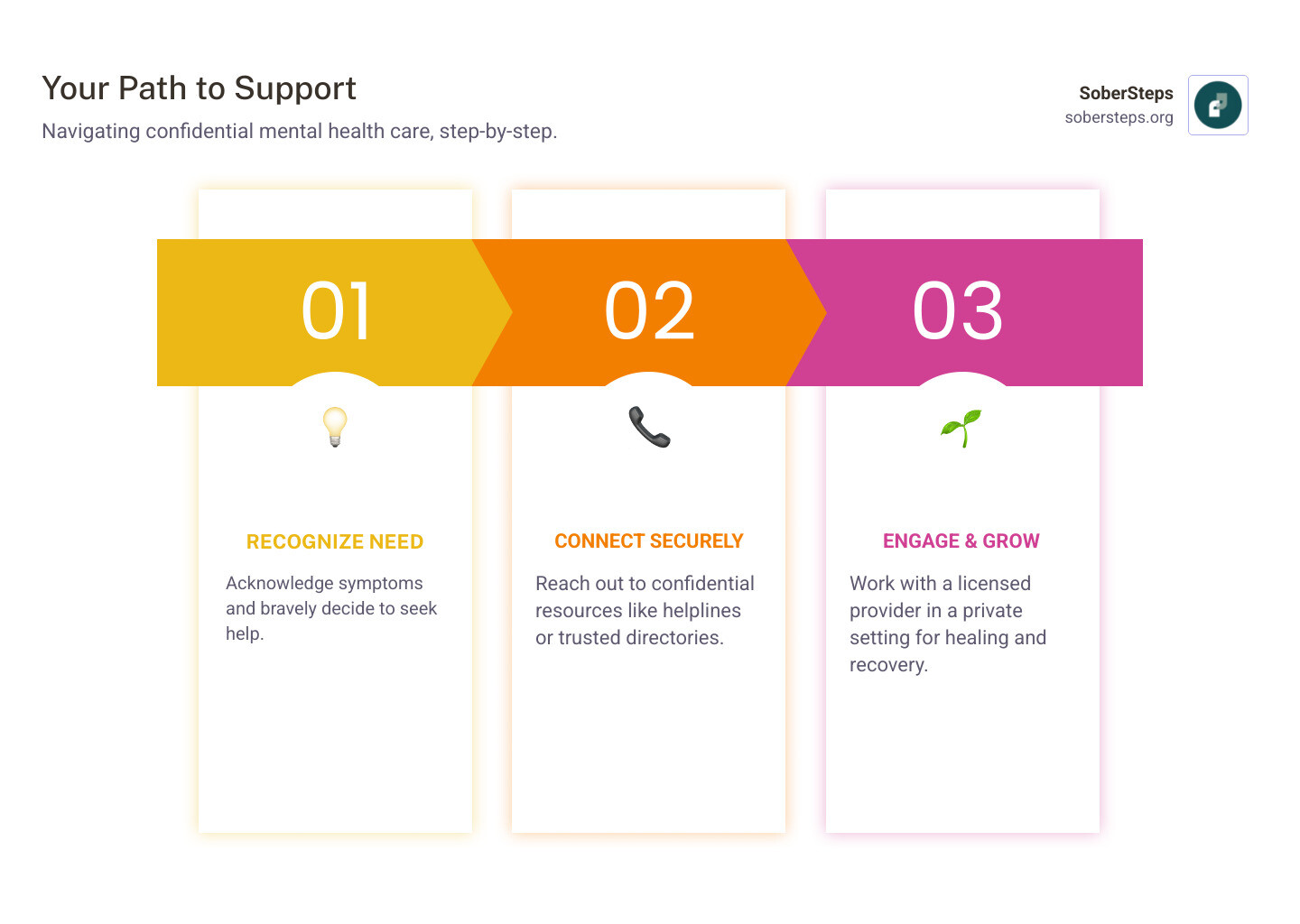
Simple guide to confidential mental health support:
What is Confidential Mental Health Support and Why is it Essential?
Confidential mental health support refers to professional services designed to help individuals with their mental and emotional well-being, where the information shared between the individual and the provider is protected by strict privacy regulations and ethical guidelines. This protection is not merely a courtesy; it’s a fundamental aspect of effective care, creating a safe and trusting environment for healing.
When you seek help for your mental health, you’re often discussing deeply personal thoughts, feelings, and experiences. The assurance that these conversations will remain private is crucial for fostering honesty and openness, which are vital for successful therapy. Without this trust, it would be incredibly difficult for us to be truly vulnerable and address the root causes of our struggles.
The benefits of seeking such support are profound. They include improved emotional regulation, where we learn healthier ways to manage our feelings; improved relationships, as we develop better communication and interpersonal skills; and increased self-awareness, allowing us to understand our patterns and motivations more clearly. In the United States, with approximately 1 in 5 adults experiencing a mental illness, accessible and confidential support is not just beneficial, it’s essential.
The importance of confidential mental health support
The fear of judgment is a powerful barrier that prevents many from seeking help. Individuals worry about how their mental health struggles might be perceived by friends, family, employers, or even colleagues. This concern isn’t unfounded; societal stigma around mental illness can lead to professional consequences, strained personal relationships, or even discrimination.
Confidential mental health support directly addresses these fears by creating a secure and private environment for healing. Knowing that what you share will not be disclosed without your explicit consent allows you to speak freely, explore difficult emotions, and work through challenges without the added burden of worrying about external reactions. This privacy fosters an environment where we can be our authentic selves, leading to more productive and meaningful therapeutic experiences. It ensures that our journey toward mental wellness remains personal and protected.
Your rights to privacy in therapy
In the United States, our rights to privacy in therapy are primarily protected by federal law, specifically the Health Insurance Portability and Accountability Act (HIPAA). HIPAA sets national standards for the protection of sensitive patient health information. Under HIPAA, our mental health information, including diagnoses, treatment plans, and therapy notes, is considered protected health information (PHI) and cannot be disclosed without our explicit authorization.
However, it’s important for us to understand that there are specific, legally mandated exceptions to confidentiality. These exceptions are in place to ensure safety and public well-being:
- Duty to warn: If a therapist believes we pose a serious and imminent threat of harm to ourselves or others, they have a legal and ethical duty to take action, which may include breaking confidentiality to notify relevant authorities or intended victims.
- Child abuse reporting: Therapists are mandated reporters of child abuse or neglect. If they suspect a child is being harmed, they are legally required to report it to child protective services.
- Court orders: In some legal proceedings, a court may issue an order compelling a therapist to release records.
- Informed consent: Before any information is shared for purposes like coordination of care with other medical professionals, our explicit informed consent is required.
These exceptions are carefully defined and designed to balance our right to privacy with the need to protect vulnerable individuals and ensure public safety. A trustworthy provider will always discuss these limits to confidentiality with us during our initial sessions, ensuring we are fully informed.
Signs You or a Loved One Might Need Support
It’s not always easy to recognize when everyday stress or sadness crosses the line into something more serious that requires professional intervention. However, there are clear signs that we or someone we care about might benefit from confidential mental health support. Recognizing these indicators is the first crucial step toward healing.

Here are some common signs to look for:
- Persistent sadness or irritability: Feeling down, hopeless, or unusually irritable for an extended period, often without a clear reason.
- Excessive worry or fear: Experiencing overwhelming anxiety, panic attacks, or intense fears that interfere with daily life.
- Extreme mood changes: Rapid and significant shifts in mood, energy levels, and behavior that are out of character.
- Social withdrawal: Pulling away from friends, family, or activities we once enjoyed, preferring isolation.
- Changes in sleep or eating patterns: Significant shifts in appetite (eating much more or much less) or sleep (insomnia or sleeping excessively).
- Substance use issues: An increased reliance on alcohol, drugs, or other substances to cope with feelings or situations. This can manifest as increased frequency, quantity, or an inability to stop despite negative consequences. If you’re concerned about alcohol use, resources like Alcohol Withdrawal can provide valuable information.
- Difficulty coping with daily life: Finding it hard to manage responsibilities at work, school, or home; feeling overwhelmed by routine tasks.
- Loss of interest in hobbies or activities: No longer finding pleasure in things that once brought joy.
- Thoughts of self-harm or suicide: Any thoughts, plans, or gestures related to harming oneself. This is a critical sign requiring immediate intervention.
If we notice one or more of these signs in ourselves or a loved one, it’s a strong indication that professional mental health support could be beneficial. Taking action early can make a significant difference in recovery and well-being.
Types of Confidential Mental Health Support Available
When we consider seeking confidential mental health support, it’s helpful to know the diverse range of options available. Mental health care is not one-size-fits-all, and different approaches can suit various needs and preferences.

From traditional in-person sessions to innovative digital platforms, here are the main types of confidential support we can access:
Professional counseling and therapy
This is often what comes to mind first when we think of mental health support. Professional counseling and therapy involve working with trained and licensed professionals who can help us understand and address our mental health challenges. These professionals include:
- Licensed therapists: Often hold master’s or doctoral degrees in psychology, counseling, or social work.
- Counselors: Provide guidance and support for specific issues, often specializing in areas like grief, trauma, or relationships.
- Social workers: Address psychological, social, and environmental factors affecting mental health, often connecting individuals with community resources.
Therapy can take several forms:
- Individual therapy: One-on-one sessions focused on our personal challenges and goals.
- Group therapy: Sessions with a small group of individuals sharing similar experiences, led by a therapist. It provides a sense of community and shared understanding.
- Family therapy: Involves multiple family members to address relational dynamics and improve communication.
At SoberSteps, we connect individuals with a trusted network of providers who offer confidential and compassionate care. Our goal is to help you find the right fit for your unique needs.
Levels of care for structured treatment
For more intensive needs, structured treatment programs offer varying levels of care. These programs are designed to provide comprehensive support while maintaining strict confidentiality:
- Detox: Medically supervised withdrawal from substances, ensuring safety and comfort during the initial phase of recovery. This is often the first step for individuals with substance use disorders.
- Inpatient programs: Residential treatment where individuals live at a facility 24/7, receiving intensive therapy, medical supervision, and structured activities. This level provides a safe and supportive environment away from triggers.
- Partial Hospitalization (PHP): A step down from inpatient care, PHP involves several hours of treatment per day, multiple days a week, while allowing individuals to return home in the evenings. It offers intensive support without full residential commitment.
- Intensive Outpatient (IOP): Less intensive than PHP, IOP provides structured therapy and support for a few hours per day, a few days a week. It offers flexibility for those who need ongoing support while managing work, school, or family responsibilities.
You can learn More on Levels of Care to understand which option might be best for you or a loved one.
Immediate crisis support
Sometimes, the need for help is urgent. For those experiencing a mental health crisis, immediate and confidential support is available 24/7. These services are designed to provide rapid assistance and de-escalation:
- Crisis hotlines: Phone lines staffed by trained professionals who offer immediate support, assessment, and referrals. The 988 Suicide & Crisis Lifeline is a prime example, providing free and confidential support for people in distress, 24/7.
- Crisis text lines: Services like Crisis Text Line allow individuals to text with a trained crisis counselor, providing an accessible and often preferred option for many, especially youth. Text HOME to 741741 for free, 24/7 mental health support.
- Online chat services: Many organizations offer confidential chat options for real-time support.
- Mobile crisis teams: In some areas, teams of mental health professionals can be dispatched to assess and support individuals in crisis in their own environment.
For immediate, confidential help, call us at (844) 491-5566. We can guide you to appropriate resources and ensure you get the urgent support you need.
How to Find and Access Help
Finding the right confidential mental health support can feel like a daunting task, but with the right approach, we can steer the options effectively. Our goal at SoberSteps is to simplify this process, connecting you with trustworthy services that prioritize your privacy and well-being.
Finding trustworthy services for confidential mental health support
When we’re looking for mental health services, trustworthiness and confidentiality should be paramount. Here’s how to ensure we find reliable support:
- Vetting providers: Look for licensed professionals. Websites like the American Psychiatric Association for psychiatrists, the American Psychological Association for psychologists, or Psychology Today for a broader directory can help us find credentialed professionals.
- Checking credentials: Always verify that a therapist, counselor, or social worker is licensed in your state. This ensures they meet specific educational and training standards.
- Reading reviews (with caution): While online reviews can offer some insight, therapy is a highly personal experience. What works for one person might not work for another.
- Using trusted directories: National resources like FindSupport.gov and findtreatment.gov (from SAMHSA) offer confidential and anonymous resources for finding treatment for mental and substance use disorders.
- Insurance coverage and affordable options: Check with your insurance provider about mental health benefits. If you don’t have insurance, SAMHSA provides guidance on how to find a health professional without insurance and resources like HealthCare.gov can help you explore coverage options. Community health centers often offer sliding-scale fees based on income.
For help navigating your options and finding the most appropriate confidential mental health support, call (844) 491-5566. Our team can assist you in connecting with services custom to your needs and budget.
What to expect during your first appointment
Our first appointment can feel a bit nerve-wracking, but knowing what to expect can help ease some of that anxiety.
- Intake process: The initial session often involves an intake process where the therapist gathers information about our history, current challenges, and goals for therapy. We might fill out forms detailing our mental health history, medical background, and any past treatments.
- Discussing your history: We’ll be asked about our background, family dynamics, significant life events, and any symptoms we’re experiencing. This helps the therapist understand our unique situation.
- Setting goals: Together, we’ll begin to identify what we hope to achieve through therapy. These goals can evolve over time, but an initial framework helps guide the process.
- Building rapport: The first few sessions are also about building rapport and trust with our therapist. It’s important for us to feel comfortable and understood.
- Asking questions about confidentiality: This is our opportunity to clarify the therapist’s confidentiality policies, including the exceptions we discussed earlier. A good therapist will welcome these questions and provide clear answers.
This first appointment is also for us to assess if the therapist is a good fit. It’s okay if it doesn’t feel right, and we can explore other options if needed.
Specialized resources for diverse communities
Mental health challenges affect everyone, but specific communities often face unique barriers and may benefit from culturally competent confidential mental health support.
Here are some specialized resources:
- Youth: For children and youth, resources like the Child and Adolescent Psychiatrist Finder can help locate specialists. Organizations like HealthyChildren.org (a service of the American Academy of Pediatrics) can also help find pediatricians who can support children’s mental health.
- Veterans: The Veterans Crisis Line offers confidential support for veterans and active-duty military, with many responders being veterans themselves. Call 988 and press 1, or text 838255.
- 2SLGBTQIA+ individuals: While specific national resources for 2SLGBTQIA+ individuals weren’t explicitly detailed in the provided research for the US, many general mental health directories allow filtering for providers with expertise in LGBTQ+ affirming care.
- Indigenous peoples: Culturally sensitive care is vital for Indigenous communities. SAMHSA’s findtreatment.gov can help find services that may offer culturally specific support.
- Postpartum support: Postpartum Support International (PSI) provides resources and support for individuals experiencing emotional changes during and after pregnancy. Call or text 1-800-944-4773.
- Disaster Distress: The Disaster Distress Helpline (1-800-985-5990) provides 24/7 crisis counseling for people experiencing emotional distress related to natural or human-caused disasters.
SoberSteps can help connect you to culturally competent, confidential care—call (844) 491-5566. We understand the importance of finding support that respects and understands your unique background.
Frequently Asked Questions about Confidential Support
Navigating confidential mental health support often brings up specific questions, especially regarding privacy in modern care delivery and accessibility. Let’s address some common concerns we hear.
Is online therapy really confidential?
Yes, online therapy can be highly confidential, but it requires both the provider and us to take certain precautions.
- Encryption: Reputable online therapy platforms use robust encryption to protect our data during transmission and storage, similar to how banking websites protect financial information.
- HIPAA-compliant platforms: Providers offering online therapy are legally required to use platforms that are HIPAA-compliant. This means the technology and processes meet federal standards for protecting our protected health information (PHI).
- Vetting online services: Before engaging with an online service, we should verify that the platform explicitly states its commitment to HIPAA compliance and data security.
- User privacy settings: We should also familiarize ourselves with the platform’s privacy settings and ensure our personal devices are secure.
- Risks of public Wi-Fi: Conducting therapy sessions over public Wi-Fi networks (e.g., in a coffee shop) can compromise confidentiality due to potential eavesdropping. Always use a secure, private network for online sessions.
While online therapy offers incredible accessibility, it’s crucial for both provider and client to uphold the necessary security measures to ensure confidentiality.
What happens if I can’t afford therapy?
Cost should never be a barrier to accessing confidential mental health support. There are several avenues we can explore if we’re concerned about the expense:
- Sliding-scale fees: Many therapists and clinics offer fees based on our income, making therapy more affordable. Don’t hesitate to ask providers if they offer a sliding scale.
- Community health centers: These centers often provide mental health services at reduced costs or for free, serving individuals regardless of their ability to pay. You can find them via findahealthcenter.hrsa.gov.
- University training clinics: Many university psychology or counseling departments operate clinics where graduate students provide therapy under the supervision of licensed professionals. These services are typically much more affordable.
- Non-profit organizations: Mental health non-profits sometimes offer low-cost counseling or can connect us with resources in our area.
- Free support groups: Organizations like NAMI (National Alliance on Mental Illness) offer free, nationwide peer-support services for individuals and their caregivers. You can find a support group for mental health, drugs, or alcohol via SAMHSA or directly through NAMI.
Don’t let financial concerns stop you from seeking help. Call (844) 491-5566 to discuss options and find resources that fit your budget.
Can my employer or family find out I’m in therapy?
Generally, no, your employer or family cannot find out you’re in therapy without your consent, thanks to strong confidentiality laws like HIPAA.
- Confidentiality laws: As discussed, HIPAA protects your health information, including your mental health records. Therapists cannot disclose that you are their client or share any details about your sessions without your written permission.
- Insurance statements (EOBs): If you use health insurance to pay for therapy, your insurance company will send an Explanation of Benefits (EOB) statement. This document typically lists the provider, dates of service, and the amount paid. If your insurance is through your employer, this EOB might be visible to the primary policyholder. If this is a concern, consider discussing self-pay options with your therapist or exploring Employee Assistance Programs (EAPs).
- Employee Assistance Programs (EAPs): Many employers offer EAPs, which provide a limited number of free, confidential therapy sessions. These programs are designed to be confidential, and employers typically only receive aggregate data (e.g., how many employees used the EAP) not individual information.
- Exceptions to privacy: Remember the exceptions to confidentiality (duty to warn, child abuse, court orders). These are rare but legally mandated situations where privacy may be breached to ensure safety.
For most situations, your participation in therapy remains private. If you have specific concerns about privacy, especially regarding insurance or EAPs, discuss them openly with your therapist.
Conclusion
Starting on a journey to improve our mental health is a powerful and courageous step. Throughout this guide, we’ve explored what confidential mental health support entails, why its privacy protections are so vital, and the diverse avenues available for finding help. We’ve seen that from understanding our rights under HIPAA to recognizing the signs that call for support, and from navigating different types of therapy to accessing immediate crisis resources, there is a comprehensive network of care designed to protect our most personal struggles.
Seeking help is never a sign of weakness; it is a profound act of self-care and resilience. Our mental health is just as critical as our physical health, and investing in it leads to a richer, more fulfilling life. The first step, though often the hardest, is a sign of immense strength.
At SoberSteps, we stand ready to support you on this path. We are committed to providing free, anonymous, and confidential connections to the mental health and substance use disorder resources you need. Your path to healing starts with a single, confidential step. For free, anonymous help finding the right support for you, call (844) 491-5566 or explore our resources to connect with the care you deserve.